- English
- Chinese
- French
- German
- Portuguese
- Spanish
- Russian
- Japanese
- Korean
- Arabic
- Irish
- Greek
- Turkish
- Italian
- Danish
- Romanian
- Indonesian
- Czech
- Afrikaans
- Swedish
- Polish
- Catalan
- Esperanto
- Hindi
- Lao
- Albanian
- Amharic
- Armenian
- Azerbaijani
- Belarusian
- Bengali
- Bosnian
- Bulgarian
- Cebuano
- Chichewa
- Corsican
- Croatian
- Dutch
- Estonian
- Filipino
- Finnish
- Frisian
- Galician
- Georgian
- Gujarati
- Haitian
- Hausa
- Hawaiian
- Hebrew
- Hmong
- Hungarian
- Icelandic
- Igbo
- Javanese
- Kannada
- Kazakh
- Khmer
- Kurdish
- Kyrgyz
- Latin
- Latvian
- Lithuanian
- Luxembou..
- Macedonian
- Malagasy
- Malay
- Malayalam
- Maltese
- Maori
- Marathi
- Mongolian
- Burmese
- Nepali
- Norwegian
- Pashto
- Persian
- Punjabi
- Serbian
- Sesotho
- Sinhala
- Slovak
- Slovenian
- Somali
- Samoan
- Scots Gaelic
- Shona
- Sindhi
- Sundanese
- Swahili
- Tajik
- Tamil
- Telugu
- Thai
- Ukrainian
- Urdu
- Uzbek
- Vietnamese
- Welsh
- Xhosa
- Yiddish
- Yoruba
- Zulu
- Kinyarwanda
- Tatar
- Oriya
- Turkmen
- Uyghur




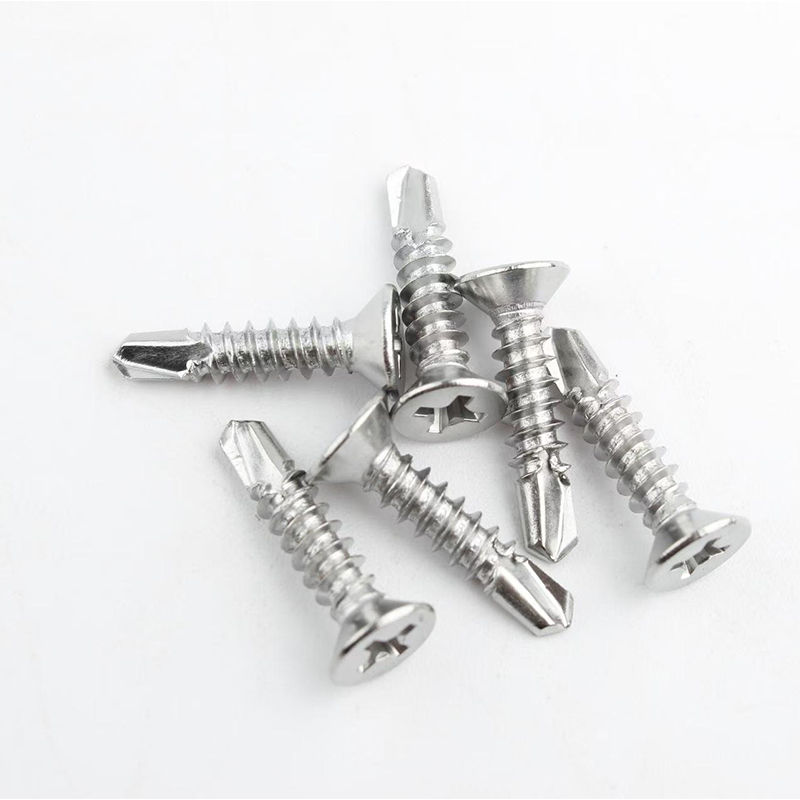
Self-tapping & Self-drilling Screws Series: OEM Manufacturer
2026-10-12
- Understanding the Core Differences: Self-Tapping vs. Self-Drilling
- Technical Comparison: Performance and Application
- Deep Dive into Self-Drilling Screw Points
- Material Science and Coatings: Ensuring Durability
- Strategic Manufacturing Insights from Handan Shengtong
- Common Installation Errors and How to Avoid Them
- Selection Guide: Choosing the Right Fastener for Your Project
- Frequently Asked Questions (FAQ)
- Conclusion and Procurement Recommendations
Torloju auto-ukituak eta auto-zulaketa torlojuak seriea represent two distinct categories of fasteners designed for efficiency in metal-to-metal and metal-to-wood applications. The primary difference lies in their tip geometry: self-tapping screws require a pre-drilled pilot hole to cut threads, whereas self-drilling screws (often called Tek screws) feature a drill-point tip that penetrates the material and forms its own hole before tapping threads. For industrial procurement, selecting the correct type is critical to preventing material warping, ensuring structural integrity, and optimizing assembly line speed.
Understanding the Core Differences: Self-Tapping vs. Self-Drilling
In the fastener industry, terminology confusion often leads to application errors. While both types are “self-threading,” their mechanical engagement with the substrate differs significantly. Understanding these nuances is essential for engineers and procurement specialists aiming to reduce production downtime and material waste.
Zer dira torloju auto-kolpeak?
Self-tapping screws are designed to cut or form threads into a pre-existing hole. They do not have the ability to drill through solid material on their own. The installation process requires a two-step approach: first, a pilot hole is drilled into the base material; second, the screw is driven into this hole, where its sharp threads cut into the walls of the pilot hole, creating a tight, secure fit.
- Mechanism: Relies on thread cutting or thread forming action.
- Requirement: Mandatory pre-drilled pilot hole.
- Best For: Thicker materials, brittle substrates, or applications requiring high clamping force without the heat generation of drilling.
- Common Types: Type A, Type AB, Type B, and sheet metal screws.
What Are Self-Drilling Screws?
Self-drilling screws integrate the functions of a drill bit and a tapping screw. The tip of the screw features a flute-like design, similar to a twist drill, which removes material as it penetrates. Once the screw has drilled through the top layer and into the base material, the threaded portion engages to secure the connection. This eliminates the need for a separate drilling operation.
- Mechanism: Drills, taps, and fastens in one continuous motion.
- Requirement: No pre-drilled hole needed (for specified thicknesses).
- Best For: High-volume assembly, thin-gauge steel, HVAC ductwork, and metal roofing.
- Common Types: Point #1, #2, #3, #4, and #5 (indicating drilling capacity).
Technical Comparison: Performance and Application
To facilitate accurate selection for engineering projects, the following table outlines the critical technical distinctions between these two fastener series. This data reflects standard industry practices and mechanical behaviors observed in construction and manufacturing environments.
| Feature | Self-Tapping Screws | Self-Drilling Screws |
|---|---|---|
| Installation Steps | Two steps: Drill pilot hole, then drive screw. | One step: Drive screw directly into material. |
| Tip Design | Sharp point or blunt end (depending on type); no flutes. | Drill point with flutes to remove debris. |
| Material Thickness | Suitable for a wide range, including thick plates. | Limited by point size (e.g., #3 point handles up to 0.375 inches). |
| Risk of Material Damage | Low, provided the pilot hole is correctly sized. | Moderate; excessive speed can cause burnout or stripping. |
| Assembly Speed | Slower due to the two-step process. | Faster; ideal for automated or high-speed manual assembly. |
| Cost Efficiency | Lower unit cost, but higher labor/time cost. | Higher unit cost, but lower overall assembly cost. |
Deep Dive into Self-Drilling Screw Points
Not all self-drilling screws are created equal. The “point number” is a critical specification that dictates the maximum thickness of steel the screw can penetrate without breaking or failing to drill. Selecting the wrong point size results in “burnout,” where friction generates excessive heat, softening the screw tip and causing it to fail.
Point #1 and #2: Light Gauge Applications
These points are designed for thin sheet metal. Point #1 is typically used for light gauge steel up to 0.125 inches, while Point #2 can handle slightly thicker materials, generally up to 0.250 inches. These are commonly found in HVAC ductwork, electrical enclosures, and light framing.
Point #3: Medium Duty Structural Work
Point #3 is the industry workhorse for general steel-to-steel connections. It can effectively drill through combined thicknesses of up to 0.375 inches. This makes it ideal for structural steel framing, metal building components, and heavier machinery assembly where moderate penetration is required.
Point #4 and #5: Heavy-Duty Penetration
For heavy structural applications, Point #4 and #5 are necessary. Point #4 can penetrate up to 0.500 inches, while Point #5 handles up to 0.750 inches. These are frequently used in bridge construction, heavy equipment manufacturing, and multi-layer steel plate connections. Using a smaller point on these materials will result in immediate tool failure.
Material Science and Coatings: Ensuring Durability
The performance of self-tapping screws and self-drilling screws series is not solely defined by geometry. Metallurgy and surface treatment play pivotal roles in preventing corrosion, reducing friction during installation, and maintaining clamp load over time.
Carbon Steel vs. Stainless Steel
Most standard self-drilling screws are manufactured from Case-Hardened Carbon Steel (typically C1022 or C1018). The case-hardening process creates a hard outer shell capable of drilling through steel while maintaining a tougher core to resist shear forces. However, carbon steel is susceptible to rust.
For corrosive environments, such as coastal construction or chemical processing plants, Stainless Steel (304 or 316 grade) is preferred. While stainless steel offers superior corrosion resistance, it is generally softer than case-hardened carbon steel. Therefore, stainless self-drilling screws are often limited to thinner materials or require specialized heat treatments to enhance drilling capability.
Coating Technologies for Friction and Corrosion Control
Coatings serve a dual purpose: protecting the substrate from galvanic corrosion and reducing the coefficient of friction during installation. Lower friction means less heat generation, which extends the life of the screw point and the driver bit.
- Zinc Plating (Electro-zinc): Provides basic corrosion resistance and a clean aesthetic. Suitable for indoor applications.
- Zinc-Aluminum (Zn-Al): Offers significantly higher corrosion resistance than pure zinc, often rated for 1,000+ hours in salt spray tests. Ideal for outdoor construction.
- Phosphate Coating: Primarily used for painting preparation or oil retention. It provides excellent friction reduction, making it easier to drive screws into hard metals.
- Dacromet/Geomet: High-performance coatings offering exceptional salt spray resistance and thermal stability, often used in automotive and power industries.
Strategic Manufacturing Insights from Handan Shengtong
Selecting the right fastener is only half the equation; sourcing from a manufacturer with rigorous quality control and technical expertise is equally vital. Handan Shengtong Fastener Manufacturing Co., Ltd., established in 2018 in Handan City, Hebei Province, has positioned itself as a key player in China’s fastener industry hub. As a modern manufacturing enterprise, the company specializes in the research and development, production, and sales of high-precision fasteners.
The company’s philosophy of “Quality first, customer supreme” is reflected in its production capabilities. By adhering to strict tolerances and utilizing advanced cold-forming and heat-treatment technologies, Handan Shengtong ensures that every screw in their self-tapping screws and self-drilling screws series meets international standards for hardness, tensile strength, and torque performance. This commitment allows them to provide diversified solutions for demanding sectors such as construction, machinery, automotive, and power generation.
For B2B buyers, partnering with a manufacturer like Handan Shengtong means accessing OEM capabilities that can tailor head styles, thread pitches, and coatings to specific project requirements. Whether it is high-strength structural bolts or precision electronic screws, the integration of R&D with mass production ensures consistent quality across large volumes.
Common Installation Errors and How to Avoid Them
Even the highest quality fasteners can fail if installed incorrectly. Field experience suggests that the majority of fastener failures are due to improper installation techniques rather than product defects. Understanding these common pitfalls can save significant time and money.
1. Over-Driving and Stripping
Over-driving occurs when the screw is driven past its optimal seating depth. This strips the threads in the base material, eliminating clamping force. To prevent this, use clutch-controlled drivers set to the appropriate torque. For self-drilling screws, stop driving once the washer is compressed and the head sits flush with the surface.
2. Under-Driving
Under-driving leaves the screw head protruding, which can interfere with subsequent assembly steps or create safety hazards. It also means the threads may not be fully engaged, reducing pull-out resistance. Ensure the driver bit is perpendicular to the work surface to avoid cam-out.
3. Incorrect Pilot Hole Size (For Self-Tapping)
If the pilot hole is too large, the threads will not engage, leading to a loose connection. If it is too small, the screw may break due to excessive torsional stress. The pilot hole diameter should generally match the root diameter of the screw thread, not the outer diameter.
4. Excessive RPM (For Self-Drilling)
High rotational speeds generate heat. If the screw tip gets too hot, it loses its hardness (temper), leading to immediate dulling and failure. Use lower RPM settings for harder materials and larger point sizes. A general rule is to start slow to establish the hole, then increase speed slightly for penetration, and slow down again as the head seats.
Selection Guide: Choosing the Right Fastener for Your Project
When specifying fasteners for engineering projects, consider the following decision matrix to ensure optimal performance and cost-efficiency.
Step 1: Analyze the Base Material
Determine the type and thickness of the materials being joined. Is it wood-to-metal, metal-to-metal, or plastic? For metal-to-metal, measure the total combined thickness. This measurement directly dictates the required screw length and point size.
Step 2: Determine Environmental Conditions
Will the assembly be exposed to moisture, chemicals, or extreme temperatures? Indoor dry environments may only require zinc plating. Outdoor or marine environments necessitate stainless steel or high-performance coatings like Zn-Al to prevent premature corrosion and structural failure.
Step 3: Evaluate Assembly Volume and Speed
For low-volume repairs or prototyping, self-tapping screws with pre-drilled holes offer precision and control. For high-volume manufacturing lines, self-drilling screws eliminate the drilling step, significantly reducing cycle time and labor costs. The initial higher cost of self-drilling screws is often offset by the savings in labor and equipment wear.
Step 4: Consider Load Requirements
Assess the shear and tensile loads the joint will bear. Structural applications require high-strength carbon steel screws with verified mechanical properties. Non-structural attachments, such as cladding or insulation, may use lighter gauge screws with wider heads for better holding power on soft materials.
Frequently Asked Questions (FAQ)
Can self-drilling screws be used in wood?
While self-drilling screws can penetrate wood, they are not optimized for it. The drill point is designed for metal removal. For wood, self-tapping screws with a sharp point (Type A) or auger-style tips are more effective as they pull the wood fibers together rather than removing them, providing better holding power.
What is the lifespan of self-drilling screws in outdoor applications?
Lifespan depends heavily on the coating and environment. Standard zinc-plated screws may show rust within months in humid conditions. Zinc-Aluminum coated screws can last 10-20 years outdoors, while stainless steel (316 grade) can last decades even in coastal saline environments. Always match the coating to the expected environmental exposure.
Why did my self-drilling screw break during installation?
Breakage is usually caused by one of three factors: the material was thicker than the screw point’s capacity, the RPM was too high causing heat-induced softening, or the screw was driven at an angle causing bending stress. Verify the point size rating against your material thickness and adjust your driver settings.
Do I need a washer with self-drilling screws?
Yes, for most exterior applications. A bonded washer (EPDM rubber bonded to the metal head) creates a watertight seal around the screw hole, preventing water ingress and corrosion. It also distributes the clamping force over a larger area, reducing the risk of distorting thin sheet metal.
Conclusion and Procurement Recommendations
The choice between self-tapping screws and self-drilling screws series fundamentally impacts the efficiency, durability, and cost of your assembly processes. Self-tapping screws offer precision and versatility for varied materials and thicknesses, particularly when pilot holes are already present or required for alignment. Self-drilling screws provide unmatched speed and convenience for metal-to-metal connections, streamlining production lines and reducing labor intensity.
For industries such as construction, automotive manufacturing, and power infrastructure, the reliability of the fastener is non-negotiable. Partnering with an experienced OEM manufacturer ensures that these critical components meet stringent quality standards. Handan Shengtong Fastener Manufacturing Co., Ltd. leverages its strategic location in Handan’s fastener hub and its commitment to R&D to deliver high-strength, high-precision solutions tailored to global industrial needs.
When sourcing these products, prioritize manufacturers who offer transparent technical data, consistent heat-treatment processes, and customizable coating options. By aligning your fastener selection with specific application requirements and leveraging expert manufacturing partners, you can enhance product longevity and operational efficiency.
For detailed specifications, custom OEM inquiries, or sample requests for our self-tapping and self-drilling screw series, contact our technical sales team today. Let us help you optimize your assembly strategy with precision-engineered fastening solutions.