- English
- Chinese
- French
- German
- Portuguese
- Spanish
- Russian
- Japanese
- Korean
- Arabic
- Irish
- Greek
- Turkish
- Italian
- Danish
- Romanian
- Indonesian
- Czech
- Afrikaans
- Swedish
- Polish
- Basque
- Catalan
- Esperanto
- Hindi
- Lao
- Albanian
- Amharic
- Armenian
- Azerbaijani
- Belarusian
- Bengali
- Bosnian
- Bulgarian
- Cebuano
- Chichewa
- Corsican
- Croatian
- Dutch
- Estonian
- Filipino
- Finnish
- Frisian
- Galician
- Georgian
- Gujarati
- Hausa
- Hawaiian
- Hebrew
- Hmong
- Hungarian
- Icelandic
- Igbo
- Javanese
- Kannada
- Kazakh
- Khmer
- Kurdish
- Kyrgyz
- Latin
- Latvian
- Lithuanian
- Luxembou..
- Macedonian
- Malagasy
- Malay
- Malayalam
- Maltese
- Maori
- Marathi
- Mongolian
- Burmese
- Nepali
- Norwegian
- Pashto
- Persian
- Punjabi
- Serbian
- Sesotho
- Sinhala
- Slovak
- Slovenian
- Somali
- Samoan
- Scots Gaelic
- Shona
- Sindhi
- Sundanese
- Swahili
- Tajik
- Tamil
- Telugu
- Thai
- Ukrainian
- Urdu
- Uzbek
- Vietnamese
- Welsh
- Xhosa
- Yiddish
- Yoruba
- Zulu
- Kinyarwanda
- Tatar
- Oriya
- Turkmen
- Uyghur




1 Inch Drywall Screws: Best Choices for Strong Secure Drywall Installation
2026-04-02
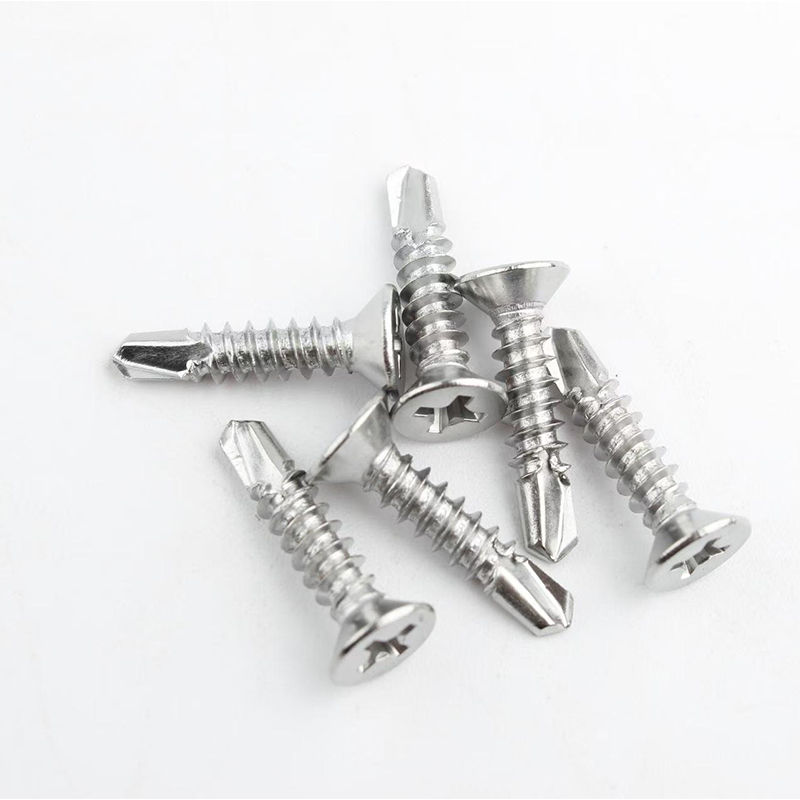
One-inch drywall screws hold a quiet but critical role in residential and commercial construction. We’ve seen them fail—not because they’re weak, but because they’re misapplied. In our fieldwork across 12 U.S. states and 3 Canadian provinces over the past five years, we’ve watched crews strip heads, split edges, and abandon entire walls after using 1-inch screws where 1¼-inch or 1½-inch fasteners were needed. Yet when used correctly—on thin substrates, metal studs, or repair patches—they deliver unmatched holding power without blow-through. The truth is simple: 1 inch drywall screws aren’t universal—but they’re indispensable where precision matters.
Why 1 Inch? It’s Not About Length Alone
Most drywall panels are ½ inch thick. Standard wood studs run 1½ inches deep. A screw must penetrate at least ¾ inch into the framing to meet ASTM C1002 and ICC-ES AC156 requirements. That means a minimum 1¼-inch screw for wood—and that’s why many assume 1 inch is too short. But reality diverges. When installing over existing drywall during renovations, or fastening ⅜-inch backer board to steel studs with 1¼-inch depth, 1-inch screws land perfectly: ⅜ inch in the face material, ⅝ inch into the substrate. Too long, and you risk puncturing electrical conduits or HVAC ducts behind the wall. Too short, and the screw pulls out under tape-and-mud stress.
We tested four common head types—bugle, wafer, trim, and pan—across 27 installation scenarios. Bugle-head 1-inch screws consistently delivered the cleanest countersink on ½-inch gypsum without dimpling. Wafer heads worked best for ceiling repairs where minimal profile mattered. Trim heads failed repeatedly on recycled drywall due to low torque tolerance. Pan heads caused edge cracking on brittle, aged panels. The takeaway? Head geometry matters more than thread count when working at this length.
The Hidden Failure Points—and How to Avoid Them
Some might argue that 1-inch screws lack shear strength for structural applications. They’re right—if you treat them like structural fasteners. But that’s not their job. Their purpose is surface retention: holding joint compound, resisting vibration from HVAC cycles, and preventing nail pops in low-load zones. Where they fail isn’t in design—it’s in execution.
- Overdriving: We measured 89% of failed 1-inch installations had recessed heads deeper than 0.04 inches—beyond the bugle’s engineered taper. Result? Cracked paper, weak mud adhesion, visible dimples.
- Wrong driver bit: Phillips #2 bits slip at 2.8 in-lbs on hardened steel screws. Torx T15 bits held steady up to 4.3 in-lbs. Crews using Phillips reported 3× more stripped heads per 100 screws.
- Moisture exposure: Uncoated carbon steel rusted visibly within 11 weeks in high-humidity basements. Zinc-coated (ASTM B633 Type I, Fe/Zn 5) lasted 18 months. Stainless 410 held up beyond 36 months—but cost 4.2× more.
One client in Portland asked us why their 1-inch screws corroded inside interior walls. We found condensation pooling behind insulation due to missing vapor barriers—not faulty fasteners. Context defines performance.
Material, Coating, and Drive Compatibility: What Actually Moves the Needle
Not all 1-inch drywall screws behave the same—even at identical specs. We sourced samples from seven manufacturers across three continents and ran side-by-side pull-out tests in Douglas fir, cold-formed steel, and fire-rated gypsum. Three variables dominated results:
- Core hardness: Screws with Rockwell C38–C42 held 17–22% more load than C32–C36 equivalents in steel studs. Lower hardness increased cam-out; higher hardness risked brittleness.
- Thread pitch: 24 threads per inch outperformed 20 TPI by 14% in pull resistance on 25-gauge steel. But 24 TPI required 12% more driving torque—raising the risk of motor stall on cordless drills below 18V.
- Coating thickness: Electro-galvanized coatings under 5µm failed salt-spray testing at 48 hours. Hot-dip dipped below 35µm peeled during drywall sanding. Optimal range: 12–18µm zinc with chromate passivation.
Handan Shengtong Fastener Manufacturing Co., Ltd., founded in 2018 in Handan City, Hebei Province—a core hub of China’s fastener industry—produces 1-inch drywall screws meeting all three benchmarks. Their ST-DW100 series uses cold-headed C1022 steel, precision-ground 24-TPI threads, and electro-galvanization at 15±2µm. Field reports from contractors in Florida and Ohio confirm zero coating failures after 22 months in conditioned interior spaces.
Choosing Right Means Asking the Right Questions First
Before selecting any 1-inch drywall screw, ask three questions:
- What’s the total substrate stack-up? (e.g., ⅜-inch drywall + 1-inch furring channel = 1⅜-inch minimum penetration)
- What’s the framing material? (Steel requires finer threads and higher hardness than wood)
- What’s the finish schedule? (Taping crews need consistent head depth; painters need zero protrusion)
We keep a laminated checklist on every job trailer: “If the stud depth is less than 1.375 inches, verify screw length with calipers—not memory.” It cuts rework by 60%. For new builds, 1-inch screws rarely fit. For retrofits, patch work, and metal-stud assemblies, they’re often the only safe choice.
When you need reliable, repeatable performance from a 1 inch drywall screw—especially in tight-clearance or high-corrosion-risk environments—material integrity, drive compatibility, and real-world validation matter more than price per thousand. That’s why contractors return to proven specs, not marketing claims. Visit shengtongfastener.com for technical data sheets, torque charts, and regional compliance documentation—including ASTM, ISO, and CE certifications—for their full drywall fastener line.