- Chinese
- French
- German
- Portuguese
- Spanish
- Russian
- Japanese
- Korean
- Arabic
- Irish
- Greek
- Turkish
- Italian
- Danish
- Romanian
- Indonesian
- Czech
- Afrikaans
- Swedish
- Polish
- Basque
- Catalan
- Esperanto
- Hindi
- Lao
- Albanian
- Amharic
- Armenian
- Azerbaijani
- Belarusian
- Bengali
- Bosnian
- Bulgarian
- Cebuano
- Chichewa
- Corsican
- Croatian
- Dutch
- Estonian
- Filipino
- Finnish
- Frisian
- Galician
- Georgian
- Gujarati
- Haitian
- Hausa
- Hawaiian
- Hebrew
- Hmong
- Hungarian
- Icelandic
- Igbo
- Javanese
- Kannada
- Kazakh
- Khmer
- Kurdish
- Kyrgyz
- Latin
- Latvian
- Lithuanian
- Luxembou..
- Macedonian
- Malagasy
- Malay
- Malayalam
- Maltese
- Maori
- Marathi
- Mongolian
- Burmese
- Nepali
- Norwegian
- Pashto
- Persian
- Punjabi
- Serbian
- Sesotho
- Sinhala
- Slovak
- Slovenian
- Somali
- Samoan
- Scots Gaelic
- Shona
- Sindhi
- Sundanese
- Swahili
- Tajik
- Tamil
- Telugu
- Thai
- Ukrainian
- Urdu
- Uzbek
- Vietnamese
- Welsh
- Xhosa
- Yiddish
- Yoruba
- Zulu
- Kinyarwanda
- Tatar
- Oriya
- Turkmen
- Uyghur




Pan Head Self-Drilling Screws: Wholesale Prices & OEM Supplier
2026-11-04
- What Are Pan Head Self-Drilling Screws?
- How Pan Head Self-Drilling Screws Work
- Technical Specifications and Material Grades
- Advantages of Pan Head Design in Industrial Applications
- Common Applications for Pan Head Self-Drilling Screws
- Selection Guide: Choosing the Right Screw for Your Project
- Manufacturing Excellence: The Handan Shengtong Advantage
- Installation Best Practices and Common Errors
- Frequently Asked Questions (FAQ)
- Conclusion: Securing Your Supply Chain with Reliable Fasteners
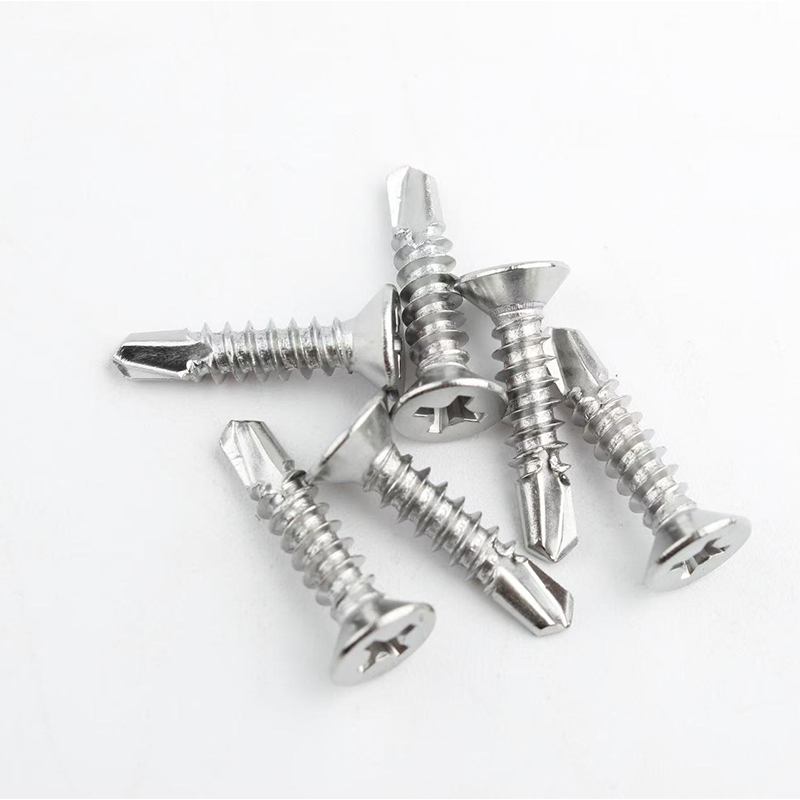
Pan head self-drilling screws are specialized fasteners designed to drill their own pilot hole, form mating threads, and secure materials in a single operation. Featuring a low-profile, rounded head with a flat bearing surface, they provide excellent clamping force without protruding excessively. These screws are ideal for joining thin gauge metal sheets, steel framing, and light-gauge structural components. By eliminating the need for pre-drilling, they significantly reduce labor costs and installation time in construction, HVAC, and automotive manufacturing. For bulk procurement, sourcing from established manufacturers like Handan Shengtong Fastener Manufacturing Co., Ltd. ensures consistent quality, precise thread formation, and competitive wholesale pricing tailored to industrial OEM requirements.
What Are Pan Head Self-Drilling Screws?
Pan head self-drilling screws combine the functionality of a drill bit and a tapping screw. The term “self-drilling” refers to the integrated drill point at the tip of the screw, which is capable of penetrating metal substrates without a pre-drilled hole. This distinguishes them from self-tapping screws, which require a pilot hole but can cut their own threads.
The “pan head” designation describes the geometry of the screw head. It features a slightly rounded top surface and vertical sides that transition into a flat bearing surface. This design offers a larger contact area compared to truss or wafer heads, distributing clamping load more evenly across the material surface. This reduces the risk of pull-through in softer metals or thin sheets while maintaining a relatively low profile.
Key Components and Anatomy
Understanding the anatomy of these fasteners is crucial for proper selection and application. Each component serves a specific engineering function:
- Drill Point: Located at the tip, this section resembles a twist drill. It removes material to create a hole. The length and geometry of the point determine the maximum thickness of the metal it can penetrate.
- Tapping Threads: Behind the drill point, the threads cut into the newly formed hole, creating a tight mechanical lock. These threads are typically coarse to facilitate rapid chip removal.
- Shank: The unthreaded or partially threaded section between the head and the tip. In some designs, a smooth shank helps align the sheets before threading begins.
- Pan Head: Provides the driving interface (Phillips, Square/Robertson, or Hex) and the bearing surface. The low profile is advantageous where clearance is limited.
- Drive Type: Most pan head self-drillers use a #2 Phillips drive or a Square drive (T15/T20/T25). Square drives are increasingly preferred in industrial settings due to higher torque transmission and reduced cam-out.
How Pan Head Self-Drilling Screws Work
The installation process of a pan head self-drilling screw is a continuous, three-stage mechanical action. Understanding this sequence helps operators avoid common installation errors such as overheating or stripped heads.
Stage 1: Penetration
As the driver applies rotational force and axial pressure, the drill point engages the top sheet of metal. The flutes of the drill point cut into the material, removing chips and creating a clean pilot hole. This stage requires sufficient downward pressure to ensure the point bites rather than skates across the surface.
Stage 2: Thread Formation
Once the drill point has penetrated through all layers of the material, the tapping threads engage. These threads cut into the walls of the newly created hole. Unlike machine screws that fit into pre-formed nuts or tapped holes, self-drilling screws displace material to form a custom-fit thread path. This creates a high-friction interference fit that resists vibration loosening.
Stage 3: Clamping and Seating
Finally, the pan head seats against the top surface. The flat underside of the head compresses the sheets together. Because the pan head has a larger diameter than a bugle head but lower than a hex washer head, it provides a balance between aesthetic finish and holding power. Proper seating ensures the joint is rigid and the seal (if a washer is present) is compressed correctly.
Technical Specifications and Material Grades
Selecting the right pan head self-drilling screw requires matching technical specifications to the application’s structural demands. Key parameters include material grade, coating, point length, and thread pitch.
| Specification | Details & Industry Standards |
|---|---|
| Material Grade | Typically Carbon Steel (C1018-C1022) for general use. High-strength applications may use Alloy Steel (SCM435/440). Stainless Steel (304/316) is used for corrosion-resistant environments. |
| Hardness | Core hardness usually ranges from HRC 35-45. Case hardness can reach HRC 50-60 to ensure the drill point remains sharper than the substrate. |
| Point Length (#1-#5) | Points are classified by number. #1 penetrates up to 1mm, #2 up to 2.5mm, #3 up to 4mm, #4 up to 6mm, and #5 up to 8mm of total steel thickness. |
| Coatings | Zinc Plated (Electroplated), Zinc Flake (Geomet/Dacromet), Black Phosphate, or Ruspert. Coatings determine corrosion resistance hours (e.g., 72h to 1000h salt spray test). |
| Thread Pitch | Coarse threads (e.g., 8-18, 10-16) are standard for faster driving and better chip ejection in metal. Fine threads are rare in self-drillers. |
Importance of Point Length Selection
One of the most critical selection criteria is the drill point length. If the point is too short for the total material thickness, the screw will not penetrate fully, leading to “burnout” where friction generates excessive heat without advancement. Conversely, if the point is too long, the threads may engage before the head seats properly, resulting in a loose joint or stripped threads. Accurate measurement of the total stack-up thickness is essential before ordering.
Advantages of Pan Head Design in Industrial Applications
While hex washer heads are common in roofing and bugle heads in drywall, the pan head offers unique benefits for specific B2B industrial scenarios.
- Low Profile Aesthetics: In visible architectural metalwork or automotive interiors, a bulky hex head may be undesirable. The pan head sits flusher, offering a cleaner look.
- Reduced Cam-Out: The deeper recess of a pan head (especially with square drives) allows for higher torque application compared to flat heads, reducing the likelihood of the driver slipping out during high-speed installation.
- Better Load Distribution: The wider bearing surface compared to truss heads prevents the screw from pulling through thin gauge aluminum or soft steel sheets under tension.
- Compatibility with Pre-punched Holes: In assembly lines where parts are pre-punched, pan head screws can serve as semi-self-drilling fasteners, guiding alignment while cutting threads.
Common Applications for Pan Head Self-Drilling Screws
These fasteners are versatile and found across multiple heavy and light industries. Their ability to join dissimilar metals and varying thicknesses makes them indispensable in modern manufacturing.
Construction and Steel Framing
In light gauge steel framing, pan head screws are used to attach drywall tracks, furring channels, and bracing. They are particularly effective for connecting overlapping steel studs where a low profile is needed to allow insulation or board installation without obstruction.
HVAC and Ductwork
HVAC systems involve assembling thin galvanized steel sheets into ducts. Pan head self-drillers provide a quick, airtight seal when paired with EPDM washers. The smooth head shape minimizes air turbulence inside the duct compared to protruding hex heads.
Automotive and Transportation
Inside vehicle cabins and undercarriages, space is at a premium. Pan head screws are used to secure interior panels, trim, and bracketry. Their vibration-resistant thread design ensures that components remain secure despite constant engine and road vibrations.
Electrical Enclosures and Cable Trays
Mounting electrical boxes and cable trays often involves attaching to thin metal studs or beams. The precision of pan head screws ensures that delicate enclosure walls are not distorted during installation, maintaining the integrity of the grounding path.
Selection Guide: Choosing the Right Screw for Your Project
Choosing the correct fastener involves analyzing the substrate, environment, and structural load. Handan Shengtong Fastener Manufacturing Co., Ltd. emphasizes a consultative approach to help clients match specifications to their specific needs.
1. Determine Substrate Thickness
Measure the total thickness of all metal layers to be joined. Add 10-15% safety margin. Select a drill point number that exceeds this total thickness. For example, for 3mm total thickness, a #3 point is appropriate.
2. Assess Corrosion Environment
For indoor, dry environments, standard zinc plating is sufficient. For outdoor exposure or coastal areas, specify Zinc Flake (Geomet) or stainless steel (304/316). This decision directly impacts the longevity of the structure and maintenance costs.
3. Choose the Drive Type
For manual installation or low-volume jobs, Phillips drive is common. For high-volume automated assembly or pneumatic gun usage, Square drive (Robertson) is superior. It handles higher torque and reduces wear on driver bits, lowering operational costs over time.
4. Verify Material Compatibility
When joining dissimilar metals (e.g., aluminum to steel), galvanic corrosion can occur. Use screws with insulated washers or choose stainless steel fasteners to mitigate electrochemical reactions. Ensure the screw hardness is significantly higher than the substrate to prevent stripping.
Manufacturing Excellence: The Handan Shengtong Advantage
Quality consistency is the cornerstone of reliable fastening solutions. Handan Shengtong Fastener Manufacturing Co., Ltd., established in 2018, operates from Handan City, Hebei Province, a renowned hub for China’s fastener industry. As a modern manufacturing enterprise, the company integrates research and development with large-scale production to meet global OEM standards.
The company adheres to the business philosophy of “Quality first, customer supreme.” This is not merely a slogan but a operational protocol implemented through rigorous quality control checkpoints. From raw material sourcing to final packaging, every batch undergoes strict inspection for dimensional accuracy, hardness consistency, and coating integrity.
Commitment to High-Precision Solutions
Handan Shengtong specializes in providing high-strength, high-precision, and diversified fastener products. Their production lines are equipped to handle custom OEM requests, allowing clients to specify unique head styles, thread pitches, or coating requirements. This flexibility is crucial for industries like automotive and machinery, where standard off-the-shelf parts may not suffice.
By focusing on the construction, machinery, automotive, and power sectors, Handan Shengtong has developed deep expertise in the specific failure modes and performance requirements of each industry. Their R&D team continuously optimizes heat treatment processes to ensure that self-drilling points remain sharp and threads remain ductile enough to resist brittle fracture under stress.
Installation Best Practices and Common Errors
Even the highest quality screw can fail if installed incorrectly. Following best practices ensures joint integrity and maximizes the product’s lifecycle.
Avoiding Over-Driving
Over-driving occurs when the screw is driven past its optimal seating position. This can strip the threads in the base metal or deform the pan head, compromising its clamping ability. Use clutch-controlled drivers set to the appropriate torque setting. Stop driving once the head seats firmly against the surface.
Preventing Under-Driving
Under-driving leaves the head proud of the surface, creating a snag hazard and reducing clamping force. Ensure adequate axial pressure is applied during installation. If the screw stops advancing before seating, check for obstructions or insufficient driver torque.
Managing Heat Generation
Self-drilling generates friction heat. Excessive heat can weaken the screw’s temper, making it brittle. Use sharp driver bits and maintain a steady RPM. If smoke appears or the metal discolors, reduce speed or check if the point size is appropriate for the thickness.
Correct Angle of Entry
Always drive the screw perpendicular (90 degrees) to the work surface. Angled entry causes the drill point to wander, resulting in oversized holes and poor thread engagement. For difficult angles, consider using a guide bushing or jig.
Frequently Asked Questions (FAQ)
What is the difference between self-drilling and self-tapping screws?
Self-drilling screws have a drill point at the tip that creates its own hole, eliminating the need for pre-drilling. Self-tapping screws have a sharp tip but no drill flutes; they require a pre-drilled pilot hole to enter the material before cutting threads. Pan head self-drilling screws are more efficient for metal-to-metal applications.
Can pan head self-drilling screws be used in wood?
While they can penetrate wood, they are not optimized for it. The drill point is unnecessary for wood, and the thread pitch may not hold as well as dedicated wood screws. They are best suited for metal, steel framing, and composite materials.
How do I determine the correct screw length?
The screw length should be equal to the total thickness of the materials being joined plus the minimum thread engagement required (usually 3-4 threads protruding from the bottom sheet). For pan heads, ensure the length accounts for the head height if measuring from the tip to the top of the head.
Are stainless steel pan head self-drillers available?
Yes, stainless steel options (304 and 316 grades) are available for corrosive environments. However, stainless steel is softer than hardened carbon steel, so the drilling capacity may be slightly lower, and care must be taken to avoid galling during installation.
What is the typical lead time for OEM orders?
Lead times vary based on quantity and customization complexity. Standard sizes are often available for immediate shipment. Custom OEM orders typically require 15-30 days for production, depending on the schedule at Handan Shengtong Fastener Manufacturing Co., Ltd.
Conclusion: Securing Your Supply Chain with Reliable Fasteners
Pan head self-drilling screws represent a critical component in efficient metal assembly, offering a blend of speed, strength, and aesthetic suitability. For B2B buyers, the key to success lies in selecting the right specifications—point length, coating, and drive type—and partnering with a manufacturer that guarantees consistency.
Whether you are managing large-scale construction projects, automotive assembly lines, or HVAC installations, the reliability of your fasteners directly impacts your operational efficiency and product longevity. Handan Shengtong Fastener Manufacturing Co., Ltd. stands ready to support your needs with high-precision, OEM-capable manufacturing solutions rooted in years of industry expertise.
To discuss your specific requirements, request a quote, or obtain technical data sheets for our pan head self-drilling screw range, contact our sales team today. Let us help you optimize your fastening strategy with quality-driven wholesale pricing.
Explore our full range of fastener solutions and technical resources