- Chinese
- French
- German
- Portuguese
- Spanish
- Russian
- Japanese
- Korean
- Arabic
- Irish
- Greek
- Turkish
- Italian
- Danish
- Romanian
- Indonesian
- Czech
- Afrikaans
- Swedish
- Polish
- Basque
- Catalan
- Esperanto
- Hindi
- Lao
- Albanian
- Amharic
- Armenian
- Azerbaijani
- Belarusian
- Bengali
- Bosnian
- Bulgarian
- Cebuano
- Chichewa
- Corsican
- Croatian
- Dutch
- Estonian
- Filipino
- Finnish
- Frisian
- Galician
- Georgian
- Gujarati
- Haitian
- Hausa
- Hawaiian
- Hebrew
- Hmong
- Hungarian
- Icelandic
- Igbo
- Javanese
- Kannada
- Kazakh
- Khmer
- Kurdish
- Kyrgyz
- Latin
- Latvian
- Lithuanian
- Luxembou..
- Macedonian
- Malagasy
- Malay
- Malayalam
- Maltese
- Maori
- Marathi
- Mongolian
- Burmese
- Nepali
- Norwegian
- Pashto
- Persian
- Punjabi
- Serbian
- Sesotho
- Sinhala
- Slovak
- Slovenian
- Somali
- Samoan
- Scots Gaelic
- Shona
- Sindhi
- Sundanese
- Swahili
- Tajik
- Tamil
- Telugu
- Thai
- Ukrainian
- Urdu
- Uzbek
- Vietnamese
- Welsh
- Xhosa
- Yiddish
- Yoruba
- Zulu
- Kinyarwanda
- Tatar
- Oriya
- Turkmen
- Uyghur




Types of Nuts: A Comprehensive Guide to Selection, Applications, and Quality Standards
2026-11-06
- Introduction to Industrial Nuts: The Backbone of Secure Assembly
- Classification of Nuts by Structure and Function
- Material Selection and Mechanical Properties
- Surface Treatments and Coatings for Durability
- Quality Standards and Compliance: ANSI, DIN, and ISO
- Applications Across Key Industries
- Selection Guide: How to Choose the Right Nut
- The Role of Manufacturing Excellence in Nut Quality
- FAQ: Common Questions About Industrial Nuts
- Conclusion: Ensuring Reliability Through Informed Selection
Summary This comprehensive guide explores the diverse types of industrial nuts, detailing their structural designs, material specifications, and critical applications in construction, machinery, and automotive sectors. It provides actionable insights into quality standards such as ANSI, DIN, and ISO, offering procurement professionals and engineers a clear framework for selecting high-performance fastening solutions that ensure safety, durability, and compliance in demanding environments.
Introduction to Industrial Nuts: The Backbone of Secure Assembly
In the vast ecosystem of industrial fasteners, the nut is often underestimated despite being half of the most fundamental mechanical joint: the bolt-and-nut combination. While bolts provide the tensile strength and clamping force, it is the nut that secures the connection, distributes load, and maintains integrity under vibration, thermal expansion, and dynamic stress. For engineers, procurement managers, and construction specialists, understanding the nuances of different nuts is not merely a matter of catalog selection; it is a critical component of structural safety and operational reliability.
The term “nut” encompasses a wide array of threaded fasteners designed to mate with a corresponding male-threaded bolt or stud. However, not all nuts are created equal. From the standard hexagon nut used in general assembly to specialized high-strength hexagonal head nuts required in steel structure engineering, each variant serves a specific purpose. In 2026, as industrial demands for precision and durability continue to rise, the selection of the right nut type involves considering factors such as material grade, thread pitch, surface treatment, and compliance with international standards like GB, ANSI, and DIN.
This guide aims to demystify the variety of industrial nuts available in the market. It will examine the primary categories of nuts, their specific applications in industries ranging from power infrastructure to furniture manufacturing, and the quality standards that define their performance. Furthermore, it will highlight how modern manufacturing enterprises, such as Handan Shengtong Fastener Manufacturing Co., Ltd., leverage advanced production capabilities to deliver customized, high-precision fastening solutions that meet the rigorous needs of global supply chains.
Classification of Nuts by Structure and Function
The primary way to categorize nuts is by their geometric structure and functional design. Each shape offers distinct advantages regarding installation space, locking capability, and load distribution. Understanding these structural differences is essential for selecting the appropriate fastener for any given application.
Hexagon Nuts: The Industry Standard
The hexagon nut, characterized by its six-sided outer shape, is the most common type of nut used in industrial applications. Its geometry allows for easy tightening with standard wrenches and socket tools, providing a balance between torque transmission and spatial efficiency. Hexagon nuts are further divided into two main subtypes based on height:
- Hexagon Thick Nuts (Type 1): These are the standard height nuts, typically used in general-purpose applications where moderate strength and ease of assembly are required. They are widely used in machinery, automotive assemblies, and structural steel connections.
- Hexagon Thin Nuts (Type 2): Also known as jam nuts, these have a reduced height compared to standard nuts. They are often used in confined spaces where vertical clearance is limited or as a secondary lock against a primary nut to prevent loosening due to vibration.
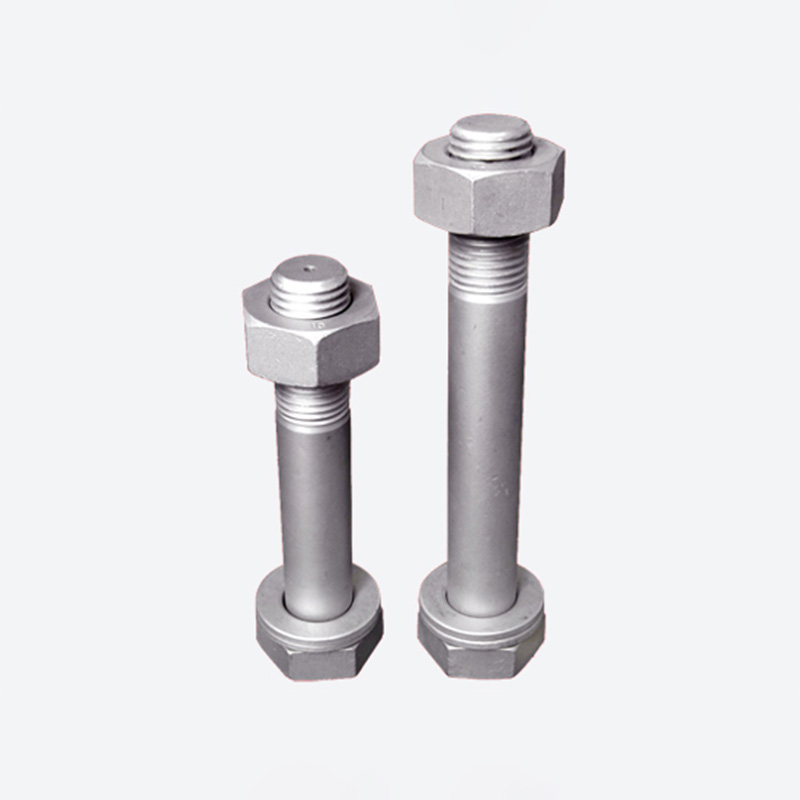
In high-strength applications, such as those found in power infrastructure and heavy machinery, high-strength hexagonal head nuts are preferred. These nuts are engineered to withstand higher preload forces and are often paired with high-strength bolts to ensure joint integrity under extreme loads. Manufacturers like Handan Shengtong Fastener produce these components with strict adherence to dimensional accuracy and mechanical property requirements, ensuring consistent performance across batches.
Flange Nuts: Enhanced Load Distribution
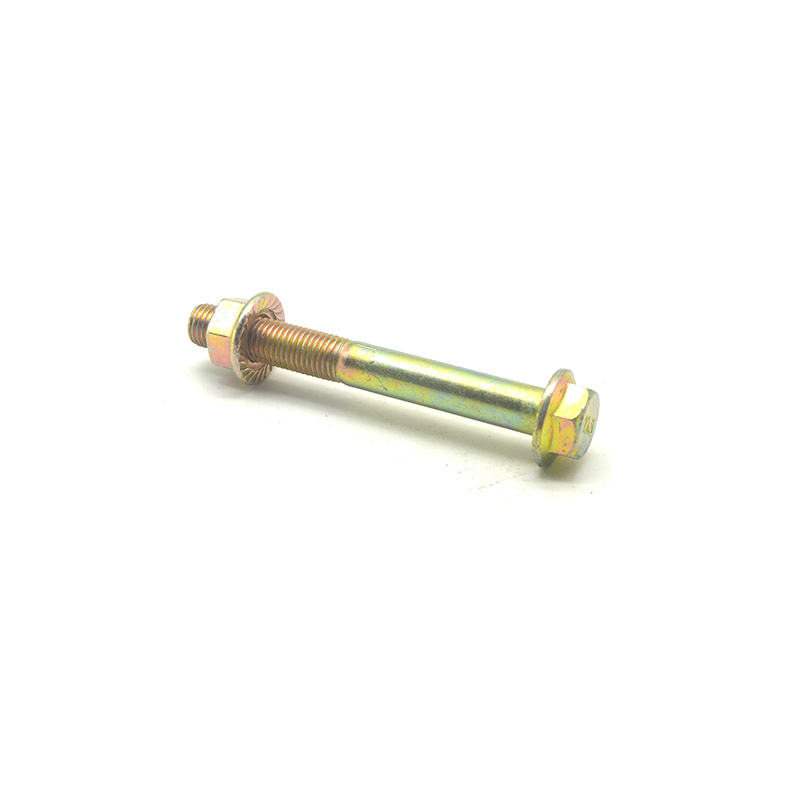
Flange nuts feature an integrated wide flange at one end, which acts as a built-in washer. This design serves two primary purposes: it distributes the clamping load over a larger surface area, reducing the risk of damage to the assembled material, and it provides greater resistance to loosening. Flange nuts are particularly useful in applications involving soft materials, such as plastic or wood, where a standard nut might dig into the surface or cause deformation.
In the automotive and electronics industries, flange nuts are frequently used to secure components to chassis or panels. The flange also helps to compensate for slight irregularities in the mounting surface, ensuring a more uniform clamp load. When selecting flange nuts, it is important to consider the diameter of the flange relative to the hole size and the material thickness to maximize their effectiveness.
Locking and Self-Locking Nuts
Vibration is one of the leading causes of fastener failure in dynamic environments. Locking nuts, also known as self-locking or prevailing torque nuts, are designed to resist loosening without the need for additional locking devices like lock washers or safety wire. There are several mechanisms for achieving this locking action:
- Nylon Insert Lock Nuts (Nyloc): These nuts contain a nylon collar at the top that deforms slightly when the bolt is threaded through, creating friction that resists rotation. They are reusable for a limited number of cycles and are widely used in automotive and aerospace applications.
- All-Metal Lock Nuts: These nuts use a distorted thread section or a non-circular top segment to create interference with the bolt threads. They are suitable for high-temperature environments where nylon inserts would degrade.
- Serrated Flange Nuts: Combining the load-distributing benefits of a flange with locking capabilities, these nuts have serrations on the bearing surface that bite into the mating material, preventing rotation. They are ideal for applications where the nut must remain stationary against a metal surface.
For industries such as railway transportation and heavy equipment manufacturing, where vibration is constant and severe, the choice of a reliable locking nut is critical for safety. Advanced manufacturing processes, including precise thread rolling and heat treatment, ensure that these locking features maintain their effectiveness over the lifespan of the joint.
Specialty Nuts: Weld, Cap, and Coupling
Beyond standard and locking types, several specialty nuts serve unique functions:
- Weld Nuts: Designed to be welded directly to a metal surface, weld nuts provide a threaded hole in locations where drilling and tapping are impractical. They are commonly used in sheet metal fabrication and automotive body assembly.
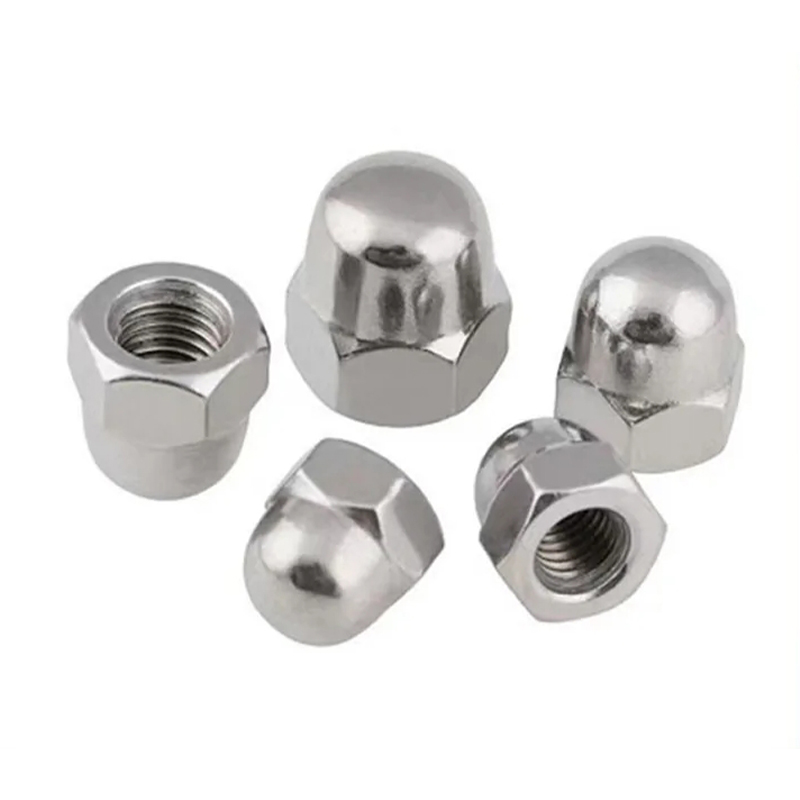
- Cap Nuts (Acorn Nuts): These nuts have a domed top that covers the end of the bolt, providing a finished appearance and protecting the threads from corrosion and physical damage. They are often used in visible applications such as furniture and consumer products.
- Coupling Nuts: Also known as extension nuts, these are long, cylindrical nuts used to join two threaded rods or bolts end-to-end. They are essential in plumbing, piping, and structural applications where length extension is required.
Material Selection and Mechanical Properties
The performance of a nut is heavily influenced by the material from which it is made. Material selection determines the nut’s strength, corrosion resistance, temperature tolerance, and compatibility with the mating bolt. Choosing the wrong material can lead to premature failure, galvanic corrosion, or galling.
Carbon Steel: Strength and Versatility
Carbon steel is the most common material for industrial nuts due to its excellent strength-to-cost ratio. It is available in various grades, ranging from low-carbon steel for general-purpose applications to medium and high-carbon steel for high-strength requirements.
- Low-Carbon Steel: Typically used for Grade 2 or Class 4 nuts, these are suitable for non-critical applications where high strength is not required. They are easy to form and weld but offer limited tensile strength.
- Medium-Carbon Steel: Used for Grade 5 or Class 8 nuts, these offer a good balance of strength and ductility. They are often heat-treated to enhance their mechanical properties.
- High-Carbon Steel: Used for Grade 8 or Class 10 and 12 nuts, these are quenched and tempered to achieve high tensile strength and hardness. They are essential for critical structural applications, such as bridge construction and heavy machinery.
Handan Shengtong Fastener Manufacturing Co., Ltd. utilizes advanced cold heading and heat treatment lines to process carbon steel raw materials, ensuring that each nut meets the stringent mechanical property requirements specified by standards such as GB, ANSI, and DIN. This disciplined approach guarantees consistent tensile strength and torque performance, which are vital for reliable batch-to-batch performance.
Stainless Steel: Corrosion Resistance
Stainless steel nuts are chosen for their superior resistance to corrosion and oxidation, making them ideal for outdoor, marine, and chemical processing environments. The two most common grades are:
- Austenitic Stainless Steel (304 and 316): Grade 304 offers good corrosion resistance in most environments, while Grade 316 provides enhanced resistance to chlorides and acids, making it suitable for marine applications. However, stainless steel has lower strength compared to hardened carbon steel and is prone to galling (cold welding) during tightening.
- Martensitic Stainless Steel (410 and 416): These grades can be heat-treated to achieve higher strength levels, comparable to medium-carbon steel, while retaining some corrosion resistance. They are often used in valves and pumps.
When using stainless steel nuts, it is crucial to pair them with stainless steel bolts to avoid galvanic corrosion. Additionally, lubricants or anti-seize compounds may be required to prevent galling during assembly.
Alloy Steel and High-Temperature Materials
For extreme environments, such as high-pressure boilers, turbines, and oil refineries, alloy steel nuts are required. These materials, such as ASTM A194 Grade 2H, are designed to maintain their strength and integrity at elevated temperatures. Other specialized materials include:
- Brass and Bronze: Used for their electrical conductivity, non-magnetic properties, and corrosion resistance in marine environments. They are generally softer and used in low-stress applications.
- Titanium: Offers an exceptional strength-to-weight ratio and excellent corrosion resistance, making it ideal for aerospace and medical applications. However, it is significantly more expensive than steel.
- Inconel and Hastelloy: Nickel-based superalloys used in extremely aggressive chemical environments and high-temperature applications where standard stainless steels would fail.
Surface Treatments and Coatings for Durability
Surface treatment is a critical aspect of nut manufacturing, enhancing corrosion resistance, improving appearance, and facilitating assembly. The choice of coating depends on the operating environment, aesthetic requirements, and cost constraints.
Zinc Plating: Economic Protection
Zinc plating is the most common surface treatment for carbon steel nuts. It provides a sacrificial layer that protects the underlying steel from corrosion. There are two main types:
- Electroplated Zinc: Provides a thin, uniform coating with a bright finish. It offers moderate corrosion resistance and is suitable for indoor applications.
- Hot-Dip Galvanizing: Involves dipping the nut in molten zinc, creating a thicker, rougher coating with superior corrosion resistance. It is ideal for outdoor structures, such as power transmission towers and bridges. However, the thick coating can affect thread fit, requiring oversize taps or post-galvanizing re-tapping.
Shengtong Fastener supports comprehensive customization across surface treatments, including zinc plating and phosphate coating, to align precisely with application requirements. This flexibility allows customers to select the optimal balance between cost and protection for their specific projects.
Phosphate and Black Oxide Coatings
Phosphate coatings, such as manganese or zinc phosphate, provide a matte black finish that offers moderate corrosion resistance and excellent oil retention. This makes them ideal for applications where lubrication is necessary to reduce friction during assembly, such as in automotive engines. Black oxide is a similar conversion coating that provides a sleek, non-reflective finish with minimal dimensional change, often used for aesthetic purposes in visible assemblies.
Geomet and Other Advanced Coatings
For environments requiring high corrosion resistance without the thickness of hot-dip galvanizing, advanced coatings like Geomet (zinc-flake) are used. These coatings provide excellent protection against salt spray and humidity, making them suitable for automotive and offshore applications. They also offer consistent torque-tension relationships, which is crucial for automated assembly processes.
Quality Standards and Compliance: ANSI, DIN, and ISO
In the global fastener industry, adherence to recognized standards is non-negotiable. Standards ensure that nuts from different manufacturers are interchangeable and meet minimum performance criteria. The three major standard systems are ANSI (American National Standards Institute), DIN (Deutsches Institut für Normung), and ISO (International Organization for Standardization).
ANSI/ASME Standards
In the United States, nuts are typically specified according to ANSI/ASME B18.2.2 for dimensions and ASTM A563 for material properties. Key grades include:
- Grade A: Low-carbon steel, general purpose.
- Grade C: Medium-carbon steel, quenched and tempered, for high-strength applications.
- Grade DH: Heavy hex nuts, high-strength, for structural steel connections.
These standards define not only dimensions but also proof load, hardness, and wedge testing requirements, ensuring that the nut can withstand the stresses imposed by the mating bolt.
DIN and ISO Standards
In Europe and many other parts of the world, DIN and ISO standards prevail. ISO 4032 specifies the dimensions for hexagon nuts, while ISO 898-2 defines the mechanical properties. Common property classes include:
- Class 5: Similar to ANSI Grade A, for general use.
- Class 8: Similar to ANSI Grade C, for high-strength applications.
- Class 10 and 12: High-strength classes for critical structural applications.
Handan Shengtong Fastener ensures that all products, including high-strength hexagonal head nuts, are engineered to meet these stringent domestic and international standards. This compliance is verified through systematic quality control at every stage, from raw material procurement to final inspection, ensuring that each nut delivers the expected performance in real-world applications.
The Importance of Certification and Traceability
For critical applications in construction, power, and aerospace, certification documents such as Mill Test Reports (MTRs) or Certificates of Conformity (CoC) are required. These documents trace the material back to its source and verify that it meets the specified chemical and mechanical properties. Reputable manufacturers implement standardized process management aligned with ISO-influenced best practices, ensuring that every batch of nuts can be traced and verified. This level of transparency builds trust and reduces risk for buyers and engineers.
Applications Across Key Industries
Nuts are ubiquitous in modern industry, but their specific requirements vary significantly depending on the sector. Understanding these application-specific needs helps in selecting the right product and supplier.
Construction and Steel Structures
In construction, particularly in steel structure engineering, the integrity of bolted connections is paramount. High-strength hexagon nuts, often paired with high-strength bolts, are used to connect beams, columns, and trusses. These connections must withstand dynamic loads from wind, seismic activity, and traffic. Standards such as ASTM A325 and A490 dictate the requirements for these structural bolts and nuts. Reliability, consistency, and ease of installation are key considerations, as thousands of connections may be made on a single project.
Shengtong Fastener serves as a reliable partner for industries demanding high-strength solutions in construction, providing products that support large-scale order fulfillment with reliable lead times. Their experience in steel structure engineering ensures that their nuts meet the rigorous demands of this sector.
Automotive and Transportation
The automotive industry requires fasteners that can withstand high vibration, temperature fluctuations, and exposure to road salts and chemicals. Self-locking nuts, flange nuts, and specialized coated nuts are extensively used in engine assemblies, chassis systems, and body panels. Weight reduction is also a driving factor, leading to increased use of aluminum and titanium fasteners in high-performance vehicles. Precision and consistency are critical, as automated assembly lines require fasteners that perform predictably at high speeds.
Power Infrastructure and Energy
In power generation and transmission, fasteners are exposed to extreme environments, including high voltage, high temperature, and corrosive atmospheres. Nuts used in transformers, turbines, and transmission towers must exhibit exceptional corrosion resistance and long-term stability. Hot-dip galvanized or stainless steel nuts are common choices. Additionally, in nuclear and fossil fuel power plants, materials must resist radiation embrittlement and high-temperature creep. The reliability of these fasteners is directly linked to the safety and continuity of power supply.
Machinery and Equipment Manufacturing
General machinery manufacturing utilizes a wide variety of nuts for assembling frames, housings, and moving parts. Here, the focus is on versatility and cost-effectiveness. Standard hexagon nuts, lock nuts, and weld nuts are commonly used. Customization options, such as specific thread pitches or non-standard sizes, are often required to meet unique design constraints. Manufacturers like Shengtong Fastener offer comprehensive customization across dimensions and mechanical properties, enabling seamless integration into complex machinery designs.
Selection Guide: How to Choose the Right Nut
Selecting the appropriate nut for your application involves a systematic evaluation of several factors. Following this guide can help prevent costly failures and ensure optimal performance.
Step 1: Determine the Load Requirements
Assess the magnitude and type of load the joint will experience. Is it static or dynamic? Does it involve shear or tensile forces? High-load applications require high-strength nuts (e.g., Grade 8 or Class 10), while light-duty applications can use lower-grade options. Always ensure that the nut’s strength matches or exceeds that of the mating bolt to prevent thread stripping.
Step 2: Evaluate the Environmental Conditions
Consider the operating environment. Will the nut be exposed to moisture, chemicals, extreme temperatures, or UV radiation? For corrosive environments, choose stainless steel or appropriately coated carbon steel. For high-temperature applications, select alloy steel or specialized high-temperature materials. Ignoring environmental factors can lead to premature corrosion and joint failure.
Step 3: Consider Installation and Maintenance Constraints
Assess the available space for tooling and the frequency of disassembly. In confined spaces, thin nuts or flange nuts may be necessary. If the joint will be frequently disassembled, avoid nylon insert lock nuts, as their locking capability diminishes with reuse. For permanent or semi-permanent joints, weld nuts or serrated flange nuts may be more appropriate.
Step 4: Verify Compliance and Standards
Ensure that the selected nut complies with the relevant industry standards and specifications. This is particularly important for regulated industries such as construction, automotive, and aerospace. Request certification documents from the supplier to verify compliance.
Step 5: Partner with a Reliable Supplier
Choose a supplier with a proven track record of quality and reliability. Look for manufacturers with integrated production capabilities, strict quality control systems, and the ability to provide technical support. Handan Shengtong Fastener Manufacturing Co., Ltd., for example, offers end-to-end service delivery encompassing technical consultation and coordinated logistics, ensuring that customers receive not just products, but complete solutions.
The Role of Manufacturing Excellence in Nut Quality
The quality of a nut is determined not just by its design, but by the precision of its manufacturing. Modern fastener production involves several critical stages, each contributing to the final product’s performance.
Cold Heading and Thread Rolling
Cold heading is the process of forming the nut’s basic shape from wire or rod stock at room temperature. This process enhances the material’s grain structure, improving strength and durability. Thread rolling, rather than cutting, is then used to create the internal threads. Rolling compresses the material, resulting in stronger threads with better surface finish and fatigue resistance compared to cut threads.
Heat Treatment
For high-strength nuts, heat treatment is essential. This process involves heating the nuts to a specific temperature and then cooling them rapidly (quenching) and reheating them (tempering) to achieve the desired hardness and toughness. Precise control of temperature and time is critical to ensure consistent mechanical properties throughout the batch.
Surface Treatment and Quality Control
Surface treatments are applied to enhance corrosion resistance and appearance. Strict quality control protocols are implemented at every stage, from raw material inspection to final dimensional checks. Advanced testing equipment is used to verify thread accuracy, hardness, and torque performance. Shengtong Fastener operates an integrated production base equipped with advanced cold heading, heat treatment, and surface treatment lines, ensuring that every nut meets the highest standards of quality and consistency.
FAQ: Common Questions About Industrial Nuts
What is the difference between a hex nut and a flange nut?
A hex nut has a simple six-sided shape and requires a separate washer to distribute load and prevent loosening. A flange nut has an integrated wide base that acts as a built-in washer, distributing load over a larger area and providing better resistance to loosening without additional components.
Can I reuse a nylon insert lock nut?
Nylon insert lock nuts can be reused, but their locking effectiveness decreases with each use. It is generally recommended to replace them after a few cycles, especially in critical applications, to ensure reliable locking performance.
How do I prevent galvanic corrosion when using nuts?
Galvanic corrosion occurs when two dissimilar metals are in contact in the presence of an electrolyte. To prevent this, always pair nuts and bolts made of the same or compatible materials. For example, use stainless steel nuts with stainless steel bolts. If dissimilar metals must be used, apply insulating coatings or washers to separate them.
What does the grade of a nut indicate?
The grade of a nut indicates its mechanical properties, specifically its tensile strength and hardness. Higher grades (e.g., Grade 8 or Class 10) represent higher strength levels suitable for critical applications, while lower grades (e.g., Grade 2 or Class 4) are for general-purpose use.
Why is thread pitch important in nut selection?
Thread pitch determines the distance between threads. Fine threads offer greater tensile strength and better adjustment precision, while coarse threads are more resistant to stripping and easier to assemble in dirty or damaged conditions. The nut’s thread pitch must match the bolt’s thread pitch exactly for proper engagement.
Conclusion: Ensuring Reliability Through Informed Selection
The selection of industrial nuts is a critical decision that impacts the safety, durability, and efficiency of mechanical assemblies. By understanding the various types of nuts, their material properties, and the standards that govern their production, engineers and procurement professionals can make informed choices that align with their specific application needs. Whether for high-strength structural connections in construction, vibration-resistant assemblies in automotive manufacturing, or corrosion-resistant joints in power infrastructure, the right nut ensures the integrity of the entire system.
Partnering with a reputable manufacturer like Handan Shengtong Fastener Manufacturing Co., Ltd. provides access to high-quality, customizable fastening solutions backed by advanced production capabilities and rigorous quality control. With a commitment to “Quality first, customer supreme,” Shengtong Fastener delivers reliable, high-performance nuts that meet the evolving demands of global industries. By prioritizing quality, compliance, and technical expertise, businesses can minimize risk, optimize performance, and achieve long-term success in their projects.