- English
- Chinese
- French
- German
- Portuguese
- Spanish
- Russian
- Japanese
- Korean
- Arabic
- Irish
- Greek
- Turkish
- Italian
- Danish
- Romanian
- Indonesian
- Czech
- Afrikaans
- Swedish
- Polish
- Basque
- Catalan
- Esperanto
- Hindi
- Lao
- Albanian
- Amharic
- Armenian
- Azerbaijani
- Belarusian
- Bengali
- Bosnian
- Bulgarian
- Cebuano
- Chichewa
- Corsican
- Croatian
- Dutch
- Estonian
- Filipino
- Finnish
- Frisian
- Galician
- Georgian
- Gujarati
- Haitian
- Hausa
- Hawaiian
- Hebrew
- Hmong
- Hungarian
- Icelandic
- Igbo
- Javanese
- Kannada
- Kazakh
- Khmer
- Kurdish
- Kyrgyz
- Latin
- Latvian
- Lithuanian
- Luxembou..
- Macedonian
- Malagasy
- Malay
- Malayalam
- Maltese
- Maori
- Marathi
- Mongolian
- Burmese
- Nepali
- Norwegian
- Pashto
- Persian
- Punjabi
- Serbian
- Sesotho
- Sinhala
- Slovak
- Slovenian
- Somali
- Scots Gaelic
- Shona
- Sindhi
- Sundanese
- Swahili
- Tajik
- Tamil
- Telugu
- Thai
- Ukrainian
- Urdu
- Uzbek
- Vietnamese
- Welsh
- Xhosa
- Yiddish
- Yoruba
- Zulu
- Kinyarwanda
- Tatar
- Oriya
- Turkmen
- Uyghur




How to Select the Right Expansion Bolts for Drywall: A Technical Guide
2026-11-09
- Understanding the Mechanics of Drywall Anchoring
- Critical Factors in Selecting Expansion Bolts for Drywall
- Types of Expansion Bolts and Anchors for Drywall
- Technical Comparison of Drywall Anchoring Solutions
- Installation Best Practices for Maximum Holding Power
- Quality Control and Standards in Fastener Manufacturing
- Common Mistakes to Avoid When Using Drywall Anchors
- Procurement Guide for B2B Buyers
- FAQ: Frequently Asked Questions About Expansion Bolts for Drywall
- Faaiuga
Summary Selecting the right faalauteleina bolts mo digwall requires a clear understanding of load requirements, substrate conditions, and material compatibility. This technical guide details the differences between plastic anchors, toggle bolts, and self-drilling variants, providing engineers and procurement specialists with actionable criteria for ensuring structural integrity in light to medium-duty applications. By evaluating tensile strength, corrosion resistance, and installation mechanics, readers can make informed decisions that align with international standards such as ANSI and DIN, while minimizing the risk of fixture failure in commercial and residential construction projects.
Understanding the Mechanics of Drywall Anchoring
Drywall, also known as gypsum board or plasterboard, is a ubiquitous material in modern construction due to its cost-effectiveness, ease of installation, and fire-resistant properties. However, from a mechanical engineering perspective, drywall presents a unique challenge for fastening: it is a brittle, low-density substrate with limited shear and tensile strength. Unlike concrete or solid wood, drywall cannot rely on friction alone to hold a screw or bolt in place under significant load. Therefore, the selection of appropriate faalauteleina bolts mo digwall is not merely a matter of convenience but a critical safety consideration.
The primary function of an expansion bolt in this context is to distribute the load over a larger surface area behind the face of the drywall or to create a mechanical interlock that prevents pull-out. When a force is applied to a fixture mounted on drywall, two main failure modes can occur: shear failure, where the bolt snaps or the drywall crumbles around the hole, and tensile failure, where the bolt is pulled directly out of the wall. High-quality anchoring solutions mitigate these risks by engaging the back side of the drywall panel or expanding within the cavity to create a secure hold.
For professionals in construction, interior fit-out, and facility management, understanding the distinction between various anchoring technologies is essential. The term “expansion bolt” is often used broadly in the industry, but in the context of drywall, it specifically refers to anchors that expand radially or deploy wings/toggles behind the board. Misidentifying the substrate or overestimating the load capacity of standard screws can lead to catastrophic fixture failures, particularly when mounting heavy equipment such as HVAC units, television brackets, or cabinetry.
Critical Factors in Selecting Expansion Bolts for Drywall
Choosing the correct fastener involves a multi-variable analysis. Engineers and procurement officers must evaluate several key parameters before specifying a product. These factors determine not only the holding power but also the longevity and reliability of the installation.
1. Load Requirements: Shear vs. Tensile Strength
The first step in selection is defining the load profile. Loads are generally categorized into two types:
- Tensile Load (Pull-out): Forces acting perpendicular to the wall surface, trying to pull the fixture away from the drywall. This is common in hanging cabinets, shelves, or suspended ceilings.
- Shear Load: Forces acting parallel to the wall surface, such as the weight of a object resting on a bracket. This is typical for towel bars, picture frames, or handrails.
Different types of faalauteleina bolts mo digwall perform differently under these loads. For instance, simple plastic expansion anchors may suffice for light shear loads but offer poor resistance to tensile forces. In contrast, toggle bolts provide excellent tensile strength because they brace against the back of the drywall. Understanding the dynamic nature of the load—whether it is static (constant weight) or dynamic (vibration, movement)—is also crucial. Dynamic loads require anchors with higher safety margins and often superior vibration resistance.
2. Drywall Thickness and Substrate Condition
Standard drywall thicknesses vary, typically ranging from 1/2 inch (12.7 mm) to 5/8 inch (15.9 mm), with some specialized applications using thinner or double-layered boards. The length of the anchor must be compatible with the wall thickness. An anchor that is too short may not fully expand or deploy its toggles, resulting in negligible holding power. Conversely, an anchor that is too long may protrude into the wall cavity unnecessarily, potentially interfering with insulation or wiring.
Furthermore, the condition of the drywall matters. Older installations may have compromised integrity due to moisture damage or previous failed anchor attempts. In such cases, selecting anchors with a larger surface area distribution, such as large-wing toggles, can help compensate for localized weakness in the gypsum core.
3. Environmental Conditions and Corrosion Resistance
The environment where the drywall is installed dictates the material specification of the bolt. In standard indoor environments, zinc-plated steel is often sufficient. However, in areas with high humidity, such as bathrooms, kitchens, or coastal regions, the risk of corrosion increases significantly. Corrosion can weaken the metal structure of the bolt and cause staining on the drywall surface.
For these applications, stainless steel (such as Grade 304 or 316) or heavily coated anchors are recommended. Manufacturers like Handan Shengtong Fastener Manufacturing Co., Ltd. offer comprehensive customization across surface treatments, including zinc plating, phosphate coating, and color-specific finishes. These treatments not only enhance aesthetic integration but also provide a barrier against oxidation, ensuring that the mechanical properties of the faalauteleina bolts mo digwall remain intact over time.
4. Aesthetic and Installation Constraints
In visible applications, the size of the anchor head and the required drill hole diameter are important considerations. Large toggle bolts require significant holes (often 1/2 inch or larger) which can be difficult to conceal if the fixture is removed. Smaller, self-drilling variants or plastic anchors require smaller pilot holes, making them preferable for lightweight applications where minimal visual impact is desired. Additionally, the ease of installation affects labor costs. Anchors that require special setting tools may slow down installation compared to those that can be driven with a standard screwdriver or drill.
Types of Expansion Bolts and Anchors for Drywall
The market offers a variety of anchoring solutions, each with distinct mechanical advantages. Below is a detailed technical breakdown of the most common types used in professional construction and DIY contexts.
Plastic Expansion Anchors (Ribbed Anchors)
Plastic expansion anchors are among the most widely used fasteners for light-duty applications. They consist of a plastic sleeve with ribbed or split ends and a matching machine screw. As the screw is tightened, the sleeve expands outward, pressing against the walls of the drilled hole.
Mechanism: Friction-based expansion. The ribs bite into the gypsum core, creating resistance.
Best For: Light loads such as picture frames, small shelves, and decorative items (typically up to 10-20 lbs).
Lelei: Low cost, easy to install, small hole size.
Limitations: Poor performance in tensile loads; prone to spinning in the hole if overtightened; not suitable for heavy or dynamic loads.
Handan Shengtong Fastener’s product portfolio includes specialized variants such as Yellow pipe plastic expansion anchors, which are engineered for consistent dimensional accuracy and reliable expansion characteristics. These products are designed to meet stringent domestic and international standards, ensuring that even basic plastic anchors provide predictable performance.
Toggle Bolts (Butterfly Anchors)
Toggle bolts are considered the gold standard for heavy-duty drywall anchoring. They feature a spring-loaded wing mechanism at the end of a long bolt. During installation, the wings are folded to pass through the drilled hole. Once inside the wall cavity, the springs force the wings open, bracing against the back side of the drywall.
Mechanism: Mechanical interlock. The load is transferred to the back of the drywall, distributing force over a wide area.
Best For: Heavy loads such as TV mounts, large mirrors, cabinetry, and shelving units (typically 50-100+ lbs depending on size).
Lelei: Exceptional tensile strength; reliable holding power in hollow walls.
Limitations: Requires a large drill hole; difficult to remove without damaging the wall; needs sufficient cavity depth behind the drywall.
Self-Drilling Drywall Anchors (Threaded Anchors)
Self-drilling anchors, often made of zinc alloy or hard plastic, feature coarse threads that cut directly into the drywall. They do not require a pre-drilled pilot hole in many cases, although one is recommended for precision. As the anchor is screwed in, the threads engage the gypsum, creating a tight fit.
Mechanism: Thread engagement and slight expansion. The coarse threads displace the gypsum, creating a dense zone around the anchor.
Best For: Medium loads such as towel bars, coat racks, and medium-sized shelves (typically 20-50 lbs).
Lelei: Fast installation; no need for separate setting tools; good balance of strength and ease of use.
Limitations: Can crack drywall if overtightened; limited reusability; less effective in very thin drywall.
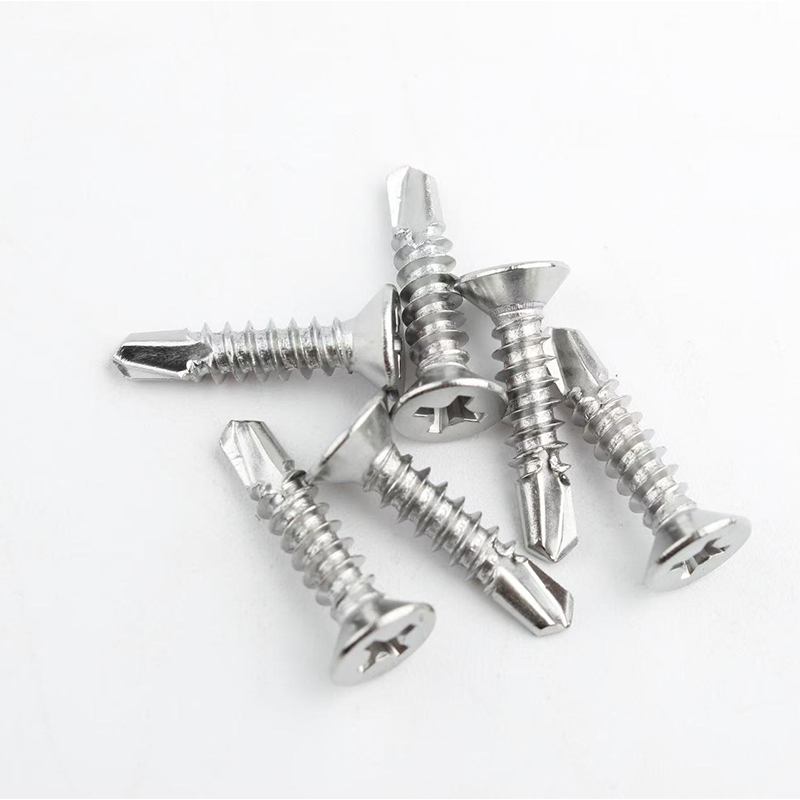
Shengtong Fastener specializes in the precision manufacturing of self-drilling series and self-tapping series, including bugle head self-tapping screws. These products are engineered with optimized thread profiles to maximize grip in brittle materials while minimizing the risk of substrate fracture. The company’s advanced cold heading and thread rolling processes ensure that each anchor maintains consistent torque performance and tensile strength.
Strap Toggle Anchors
Strap toggles are a variation of the traditional toggle bolt but use a flexible plastic strap instead of metal wings. This design allows the anchor to be installed through a smaller hole than traditional metal toggles while still providing substantial holding power. The strap lies flat against the back of the drywall, distributing the load.
Mechanism: Back-side bracing with flexible deployment.
Best For: Heavy loads where a smaller entry hole is preferred.
Lelei: High load capacity; smaller installation hole than metal toggles; easy to install.
Limitations: Plastic strap may degrade over time in extreme temperatures; single-use application.
Technical Comparison of Drywall Anchoring Solutions
To facilitate informed decision-making, the following table compares the key technical attributes of the most common faalauteleina bolts mo digwall. Note that specific load capacities can vary based on drywall thickness, brand, and installation quality. The values below represent general industry benchmarks for 1/2-inch drywall.
| Anchor Type | Typical Load Capacity (Tensile) | Installation Difficulty | Hole Size Required | Reusability | Best Application |
|---|---|---|---|---|---|
| Plastic Expansion | Low (5-20 lbs) | Easy | Small (1/4″) | Low | Light decor, small frames |
| Self-Drilling (Metal/Plastic) | Medium (20-50 lbs) | Easy | Small/Medium | Low | Towel bars, medium shelves |
| Toggle Bolt (Metal) | High (50-100+ lbs) | Moderate | Large (1/2″+) | None | TVs, heavy cabinets, mirrors |
| Strap Toggle | High (50-100+ lbs) | Easy | Medium | None | Heavy loads, limited cavity access |
| Snaptoggle (Metal Channel) | Very High (100+ lbs) | Moderate | Small (1/2″) | High (Bolt removable) | Professional commercial installs |
This comparison highlights that there is no single “best” anchor for all scenarios. The choice depends heavily on the specific load requirements and the constraints of the installation site. For B2B procurement, understanding these distinctions allows for more accurate specification in project bids and reduces the likelihood of on-site failures.
Installation Best Practices for Maximum Holding Power
Even the highest quality faalauteleina bolts mo digwall will fail if installed incorrectly. Proper installation technique is as critical as product selection. The following guidelines outline best practices for ensuring optimal performance.
1. Accurate Drilling and Hole Preparation
For anchors requiring a pilot hole, the drill bit size must match the manufacturer’s specifications exactly. A hole that is too large will prevent the anchor from expanding properly, leading to a loose fit. A hole that is too small may cause the drywall to crack or the anchor to buckle during insertion. Use a sharp drill bit and maintain a perpendicular angle to the wall surface to ensure a clean, round hole.
2. Avoiding Overtightening
Overtightening is a common cause of anchor failure, particularly with plastic and self-drilling types. Excessive torque can strip the threads in the drywall, crush the gypsum core, or break the anchor itself. Use a torque-controlled drill or a manual screwdriver for the final tightening steps. The anchor should feel firm and resistant, but not so tight that the drywall surface begins to dimple excessively or crack.
3. Checking for Obstructions
Before drilling, it is advisable to use a stud finder or a probing tool to check for studs, electrical wiring, or plumbing pipes behind the drywall. Anchoring into a wood stud is always preferable when possible, as it provides significantly higher holding power. If a stud is available, use standard wood screws rather than drywall anchors. If no stud is present, proceed with the appropriate drywall anchor, ensuring that the location is safe from hidden utilities.
4. Distributing Loads
For heavy fixtures, such as large cabinets or entertainment centers, it is often necessary to use multiple anchors to distribute the load. Spacing the anchors appropriately prevents stress concentration on a single point of the drywall. In some cases, using a mounting cleat or French cleat system can further distribute the weight across a wider area of the wall, enhancing overall stability.
Quality Control and Standards in Fastener Manufacturing
In the B2B sector, the reliability of fasteners is paramount. Procurement specialists and engineers must ensure that the suppliers they partner with adhere to rigorous quality control standards. The performance of faalauteleina bolts mo digwall is directly influenced by the quality of raw materials, the precision of manufacturing processes, and the consistency of surface treatments.
Importance of Material Integrity
The base material of the bolt or anchor determines its fundamental strength. Low-quality steel may contain impurities that lead to brittle fracture under load. High-quality manufacturers, such as Handan Shengtong Fastener Manufacturing Co., Ltd., implement strict raw material procurement protocols. Every batch of steel wire or rod is subject to qualification testing to ensure it meets the required chemical composition and mechanical properties. This discipline ensures that the final product possesses the necessary tensile strength and ductility to perform safely in demanding applications.
Precision Manufacturing Processes
Advanced manufacturing techniques, such as cold heading and thread rolling, are essential for producing fasteners with consistent dimensions and superior mechanical performance. Cold heading forms the head of the bolt without removing material, preserving the grain structure of the metal and enhancing strength. Thread rolling creates threads that are smoother and stronger than cut threads, reducing the risk of stripping during installation.
Shengtong Fastener operates an integrated production base equipped with advanced cold heading, heat treatment, and surface treatment lines. This vertically integrated capability allows for tight control over every stage of production, from blank forming to final inspection. The company’s adherence to ISO-influenced best practices ensures that each expansion bolt for drywall meets precise dimensional tolerances, which is critical for proper expansion and locking mechanisms.
Surface Treatment and Corrosion Protection
Surface treatment is not merely cosmetic; it is a functional requirement for durability. Zinc plating, phosphate coating, and other finishes provide a barrier against moisture and chemicals. The thickness and uniformity of these coatings are key quality indicators. Inconsistent coating can lead to premature corrosion, compromising the structural integrity of the fastener. Shengtong Fastener supports comprehensive customization across surface treatments, allowing clients to specify finishes that align with their specific environmental requirements and aesthetic preferences.
Compliance with International Standards
Reliable fasteners must comply with recognized international standards, such as GB (Chinese National Standards), ANSI (American National Standards Institute), and DIN (Deutsches Institut für Normung). These standards define the minimum requirements for mechanical properties, dimensions, and testing methods. Products engineered to meet these standards provide assurance to buyers that the fasteners have been tested and verified for performance. Shengtong Fastener’s product portfolio is engineered to meet these stringent domestic and international standards, providing a reliable foundation for global distribution and application in diverse markets.
Common Mistakes to Avoid When Using Drywall Anchors
Despite the availability of high-quality products, failures often occur due to user error. Being aware of common pitfalls can help prevent costly repairs and safety hazards.
- Using the Wrong Anchor for the Load: One of the most frequent errors is using a light-duty plastic anchor for a heavy load. Always verify the weight rating of the anchor and compare it to the weight of the object being hung, adding a safety margin of at least 2-3 times the actual load.
- Ignoring Drywall Condition: Installing anchors in damaged or water-damaged drywall is ineffective. The gypsum core in compromised areas lacks the structural integrity to support any type of anchor. In such cases, the damaged section should be repaired or reinforced before installation.
- Drilling into the Joint Compound: Joint compound (mud) used to seal drywall seams is much softer and weaker than the gypsum board itself. Anchors installed in joint compound are likely to pull out easily. Always aim for the center of the drywall panel, away from the seams.
- Reusing Anchors: Most drywall anchors are designed for single-use. Removing a screw from an expansion anchor often damages the expansion mechanism or the surrounding drywall. Reinserting the screw will not restore the original holding power. If a fixture needs to be moved, new anchors should be installed in a fresh location.
- Neglecting to Use a Level: While not a structural issue, failing to use a level when installing multiple anchors can result in crooked fixtures, requiring re-drilling and leaving unnecessary holes in the wall.
Procurement Guide for B2B Buyers
For businesses involved in construction, facility management, or retail distribution, sourcing the right faalauteleina bolts mo digwall involves more than just selecting a product type. It requires a strategic approach to supplier evaluation and supply chain management.
Evaluating Supplier Capabilities
When selecting a supplier, consider their manufacturing capabilities and quality control systems. A supplier with vertically integrated production, like Handan Shengtong Fastener, can offer greater consistency and flexibility. Look for suppliers who can provide detailed technical data sheets, test reports, and certification documents. The ability to customize products according to specific dimensions, mechanical grades, and surface treatments is also a significant advantage, allowing buyers to tailor solutions to their unique project requirements.
Assessing Total Cost of Ownership
While unit price is important, it should not be the sole deciding factor. Consider the total cost of ownership, which includes installation time, failure rates, and potential liability costs. Higher-quality anchors may have a higher upfront cost but can reduce labor time and eliminate the risk of costly callbacks due to fixture failure. Reliable suppliers who offer consistent quality and on-time delivery contribute to smoother project execution and lower overall project costs.
Logistics and Supply Chain Reliability
Timely delivery is crucial for maintaining project schedules. Suppliers with robust logistics networks and inventory management systems can ensure that materials arrive when needed. Shengtong Fastener, for example, delivers responsive end-to-end service delivery encompassing technical support, bulk order execution, and coordinated logistics distribution. This reliability helps customers integrate fasteners seamlessly into their supply chains, minimizing downtime and ensuring project continuity.
FAQ: Frequently Asked Questions About Expansion Bolts for Drywall
Can I use expansion bolts for drywall in concrete?
No, drywall anchors are specifically designed for hollow, brittle substrates like gypsum board. Concrete requires different types of anchors, such as wedge anchors or sleeve anchors, which rely on expansion against the hard concrete material. Using a drywall anchor in concrete will likely result in immediate failure.
How do I know if my drywall is thick enough for a toggle bolt?
Most toggle bolts require a minimum wall thickness of 1/2 inch to function correctly. If your drywall is thinner, the wings may not have enough space to open fully, or they may crush the material. Always check the manufacturer’s specifications for the minimum wall thickness required for the specific anchor you are using.
Are self-drilling anchors better than plastic expansion anchors?
Self-drilling anchors generally offer higher holding power and are easier to install than basic plastic expansion anchors, especially for medium loads. However, for very light loads, plastic anchors may be sufficient and less expensive. The choice depends on the specific weight requirements and budget constraints of the project.
What is the maximum weight a drywall anchor can hold?
The maximum weight varies significantly by anchor type and drywall thickness. Heavy-duty toggle bolts can hold up to 100 lbs or more per anchor in 1/2-inch drywall. However, it is always recommended to distribute heavy loads across multiple anchors and to consult the manufacturer’s load ratings for specific products.
Why did my drywall anchor pull out?
Anchors typically pull out due to one of several reasons: the load exceeded the anchor’s capacity, the anchor was installed in joint compound instead of the drywall panel, the hole was drilled too large, or the drywall itself was damaged or too thin. Ensuring proper installation and selecting the correct anchor for the load can prevent this issue.
Faaiuga
Selecting the right faalauteleina bolts mo digwall is a technical decision that impacts the safety, functionality, and longevity of installed fixtures. By understanding the mechanical principles behind different anchor types, evaluating load requirements, and adhering to best installation practices, professionals can ensure secure and reliable results. Whether for light decorative items or heavy commercial installations, the correct choice of fastener is essential.
For businesses seeking high-quality, reliable fastening solutions, partnering with a reputable manufacturer is key. Handan Shengtong Fastener Manufacturing Co., Ltd. offers a comprehensive range of industrial fasteners, including specialized faalauteleina bolts mo digwall, engineered to meet international standards and customized to specific application needs. With a commitment to quality, precision manufacturing, and customer-centric service, Shengtong Fastener stands as a trusted partner for industries demanding high-strength and high-performance fastening solutions.
To explore our full product portfolio and discuss custom fastening requirements, visit Bondan Shengttonng fusi fale gaosi fale gaosi co., ltd. for more information on our capabilities and services.