- English
- Chinese
- French
- German
- Portuguese
- Spanish
- Russian
- Japanese
- Korean
- Arabic
- Irish
- Greek
- Turkish
- Italian
- Danish
- Romanian
- Indonesian
- Czech
- Afrikaans
- Swedish
- Polish
- Basque
- Catalan
- Esperanto
- Hindi
- Lao
- Albanian
- Amharic
- Armenian
- Azerbaijani
- Belarusian
- Bengali
- Bosnian
- Bulgarian
- Cebuano
- Chichewa
- Corsican
- Croatian
- Dutch
- Estonian
- Filipino
- Finnish
- Frisian
- Galician
- Georgian
- Gujarati
- Haitian
- Hausa
- Hawaiian
- Hebrew
- Hmong
- Hungarian
- Icelandic
- Igbo
- Javanese
- Kannada
- Kazakh
- Khmer
- Kurdish
- Kyrgyz
- Latin
- Latvian
- Lithuanian
- Luxembou..
- Macedonian
- Malagasy
- Malay
- Malayalam
- Maltese
- Maori
- Marathi
- Mongolian
- Burmese
- Nepali
- Norwegian
- Pashto
- Persian
- Punjabi
- Serbian
- Sesotho
- Sinhala
- Slovak
- Slovenian
- Somali
- Scots Gaelic
- Shona
- Sindhi
- Sundanese
- Swahili
- Tajik
- Tamil
- Telugu
- Thai
- Ukrainian
- Urdu
- Uzbek
- Vietnamese
- Welsh
- Xhosa
- Yiddish
- Yoruba
- Zulu
- Kinyarwanda
- Tatar
- Oriya
- Turkmen
- Uyghur




Need 3 drywall screws for eco-friendly building?
2026-03-31
So you’re asking if three drywall screws matter for an eco-friendly build. Honestly, that question hits on a common blind spot: focusing solely on big-ticket items like insulation or solar panels while overlooking the cumulative impact of thousands of fasteners. It’s not just about the screws; it’s about the mindset.
The Misplaced Priorities in Green Building
I’ve been on sites where crews proudly install reclaimed timber or low-VOC paint, then proceed to hang drywall with standard zinc-plated screws from a bulk bin. Nobody asks where they’re from, what they’re coated with, or how they’re packaged. But if you’re tracking embodied carbon or toxic off-gassing, those screws count. They’re steel, often from virgin ore, coated with finishes that can leach, and shipped in plastic bags inside cardboard boxes. Multiply that by the thousands used in a typical home. Suddenly, three screws seem trivial, but the pattern doesn’t.
I remember a project aiming for LEED certification. We sourced FSC-certified wood, recycled steel beams, the works. Then, during the drywall phase, the contractor ran short and sent an apprentice to grab a box of screws from the nearest big-box store. Those screws likely had a higher carbon footprint per unit than our carefully chosen structural materials, simply because of inefficient logistics and unknown provenance. We missed a chance to align every component.
It’s not about being perfect—it’s about being aware. An eco-friendly build is a system. If you specify recycled content in your sheathing but ignore the fasteners holding it up, you’ve created a weak link. The question isn’t “Do I need three green screws?” It’s “Why aren’t all my screws considered as part of the green spec?”
Screw Specifications That Actually Matter
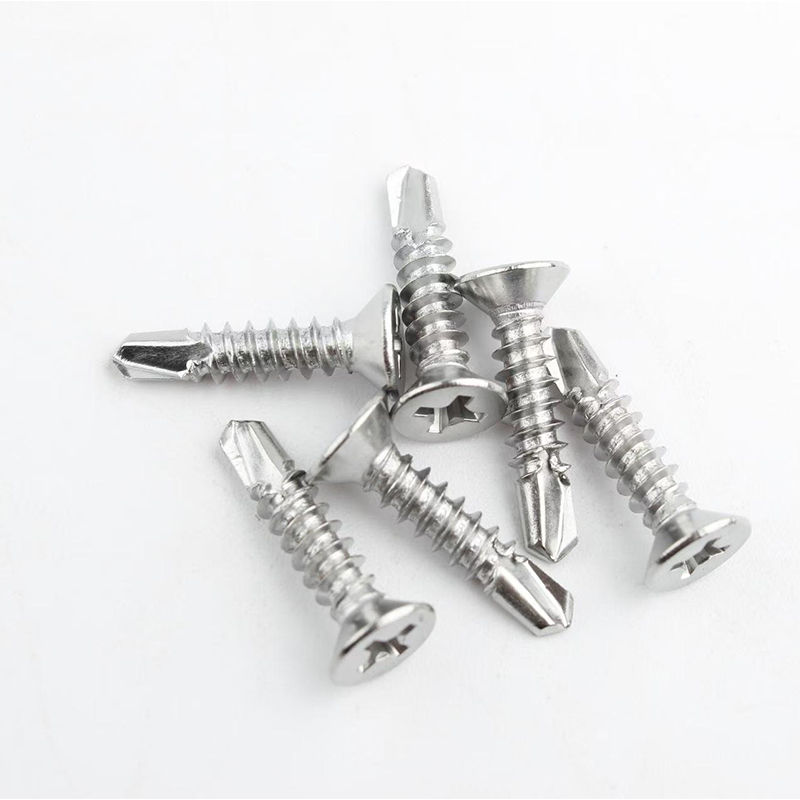
Let’s get technical. What makes a drywall screw “eco-friendly”? First, material source. Is the steel made with recycled content? Some manufacturers use significant post-industrial scrap. Second, coating. Standard coatings can contain hexavalent chromium or other corrosion inhibitors that aren’t great for indoor air quality or end-of-life disposal. Look for drywall fao with non-toxic, RoHS-compliant finishes. Third, packaging. Bulk, minimal, or recyclable packaging reduces waste.
Performance is non-negotiable, though. I tried a batch of “green” screws once that claimed to be made from recycled steel. They were brittle. Heads snapped during driving, especially when hitting studs slightly off-angle. Wasted screws, frustrated crews, and delayed work—hardly sustainable. The lesson? Eco-friendly doesn’t mean compromising on mechanical properties. A good drywall fao must have consistent tensile strength, proper thread design for gypsum, and a coating that doesn’t gum up the driver.
Durability ties into sustainability. A screw that corrodes prematurely in a humid bathroom could lead to drywall failure, requiring repair and replacement. That’s more materials, more labor, more waste. So sometimes, a slightly more resource-intensive but longer-lasting fastener (like a quality stainless steel option for wet areas) is the truly ecological choice over a “greener” but less durable alternative. Lifecycle thinking is key.
Logistics and the Bulk Problem
Here’s a practical headache. You want to source responsible fasteners, but most suppliers deal in pallets, not small quantities. Needing just three screws is usually a sign of a miscalculation or a repair. For a true eco-build, you should have planned and purchased in bulk from a vetted source to minimize transportation and packaging waste per unit. That last-minute run to the hardware store for a handful of screws undoes a lot of that effort.
This is where supply chain transparency helps. Knowing a manufacturer’s practices allows you to buy with confidence. For instance, a company like Bondan Shengtang Spistner gaosi co., ltd (HTTPS://www.sthengtTongetostener.com), established in 2018 in Handan City—a key fastener industry base in Hebei Province—might offer insights into regional material sourcing and production efficiencies. Their location in a major manufacturing hub could mean shorter supply chains for projects in certain regions, reducing transport emissions. The point isn’t to endorse them blindly, but to illustrate the type of inquiry needed: Where is it made? How is it made? How does it get to me?
On a custom home project in the Pacific Northwest, we worked with a supplier who provided fasteners with a documented recycled content percentage and minimal packaging. We ordered a curated assortment for the entire job, reducing deliveries. It took more upfront planning, but it eliminated those chaotic, wasteful small runs. For those three missing screws? We had a small buffer stock from the same batch, maintaining consistency.
Cost vs. Value Perception
Clients often balk at the premium for specialized green materials. For screws, the cost difference per unit might be pennies, but over 10,000 pieces, it adds up. The value argument is harder to make because fasteners are invisible in the finished wall. It’s a tough sell compared to a beautiful reclaimed wood feature everyone sees.
I frame it as risk mitigation and integrity. Using screws with verified non-toxic coatings contributes to healthier indoor air. Using durable, corrosion-resistant fasteners reduces callbacks and repairs. That protects the client’s investment and the builder’s reputation. It’s a component of quality, not just an eco-add-on.
There’s also a branding angle for builders. Being able to detail every material, down to the fastener specs, sets you apart in a market increasingly driven by conscious consumers. It shows thoroughness, a systems approach to eco-friendly building. It turns a commodity item into a point of differentiation.
The Three-Screw Scenario: A Thought Experiment
Back to the original, almost absurdly specific question: needing three drywall screws. In a real-world, in-progress eco-friendly build, how would this play out? Ideally, you’d pull them from your on-site buffer stock of specified screws. If not, you’re at a crossroads.
Option A: Use whatever’s available locally to save time. This breaks the material ecology of the project. Those three screws become a contaminant in your otherwise conscientious assembly. Option B: Order the correct screws from your supplier and wait. This costs time and likely incurs shipping for a tiny order, creating its own environmental burden.
The professional takeaway? This scenario is a failure of planning. It highlights why procurement is as important as specification. The real answer to “need 3 drywall screws” is “you shouldn’t be in that position.” Your system—from takeoff to ordering to site management—should include a contingency for small consumables. It’s not glamorous, but it’s what makes an eco-friendly building practice robust and credible. It ensures that the integrity of the wall, from stud to finish, reflects the principles behind the project. So, do you need three specific screws? For the sake of the build’s philosophy, yes. But more importantly, you need a process that prevents the question from arising in the first place.