- English
- Chinese
- French
- German
- Portuguese
- Spanish
- Russian
- Japanese
- Korean
- Arabic
- Irish
- Greek
- Turkish
- Italian
- Danish
- Romanian
- Indonesian
- Czech
- Afrikaans
- Swedish
- Polish
- Basque
- Catalan
- Esperanto
- Hindi
- Lao
- Albanian
- Amharic
- Armenian
- Azerbaijani
- Belarusian
- Bengali
- Bosnian
- Bulgarian
- Cebuano
- Chichewa
- Corsican
- Croatian
- Dutch
- Estonian
- Filipino
- Finnish
- Frisian
- Galician
- Georgian
- Gujarati
- Haitian
- Hausa
- Hawaiian
- Hebrew
- Hmong
- Hungarian
- Icelandic
- Igbo
- Javanese
- Kannada
- Kazakh
- Khmer
- Kurdish
- Kyrgyz
- Latin
- Latvian
- Lithuanian
- Luxembou..
- Macedonian
- Malagasy
- Malay
- Malayalam
- Maltese
- Maori
- Marathi
- Mongolian
- Burmese
- Nepali
- Norwegian
- Pashto
- Persian
- Punjabi
- Serbian
- Sesotho
- Sinhala
- Slovak
- Slovenian
- Somali
- Scots Gaelic
- Shona
- Sindhi
- Sundanese
- Swahili
- Tajik
- Tamil
- Telugu
- Thai
- Ukrainian
- Urdu
- Uzbek
- Vietnamese
- Welsh
- Xhosa
- Yiddish
- Yoruba
- Zulu
- Kinyarwanda
- Tatar
- Oriya
- Turkmen
- Uyghur




Steel Structure Bolts: Wholesale Prices & OEM Manufacturer
2026-11-04
- What Are Steel Structure Bolts and Why Do They Matter?
- Key Types of Steel Structure Bolts for Industrial Applications
- Technical Specifications and Material Standards
- How to Choose the Right Steel Structure Bolts: A Buyer’s Guide
- Manufacturing Excellence: The Handan Shengtong Advantage
- Common Mistakes in Steel Structure Bolt Procurement
- Frequently Asked Questions (FAQ)
- Conclusion: Securing Your Project with Reliable Fasteners
Steel fausaga polts are high-strength fasteners engineered to connect steel components in construction, infrastructure, and heavy machinery. Unlike standard hardware, these bolts must withstand significant shear and tensile loads, ensuring structural integrity under dynamic stress. For project managers and procurement specialists, sourcing directly from an OEM manufacturer like Bondan Shengttonng fusi fale gaosi fale gaosi co., ltd. offers critical advantages: competitive wholesale pricing, strict adherence to international standards (ASTM, ISO, DIN), and customized solutions for complex engineering requirements. This guide details technical specifications, selection criteria, and manufacturing insights to help you secure reliable, cost-effective fastening solutions for your next project.
What Are Steel Structure Bolts and Why Do They Matter?
Steel structure bolts are not merely screws; they are precision-engineered components designed to transfer loads between steel members. In modern construction, particularly in high-rise buildings, bridges, and industrial warehouses, the connection points are often the most vulnerable areas. A failure in a bolted joint can compromise the entire structure.
These fasteners differ from ordinary bolts in three key aspects:
- Material Strength: They are manufactured from medium carbon steel or alloy steel, heat-treated to achieve high tensile strength (typically Grade 8.8, 10.9, or 12.9).
- Precision Tolerance: The thread pitch and diameter are held to tighter tolerances to ensure proper fit with matching nuts and washers, preventing loosening under vibration.
- Load Distribution: They are designed to work in conjunction with hardened washers to distribute clamping force evenly, reducing the risk of material deformation.
Understanding these distinctions is vital for engineers and buyers. Using standard commercial-grade bolts in structural applications is a severe safety violation and a common cause of structural fatigue. Therefore, verifying the grade and certification of every batch is non-negotiable.
Key Types of Steel Structure Bolts for Industrial Applications
Selecting the right bolt type depends on the load direction (shear vs. tension), the environment (corrosive vs. dry), and the installation method. Below are the primary categories used in global construction and manufacturing.
High-Strength Hex Head Bolts (ASTM A325 / A490)
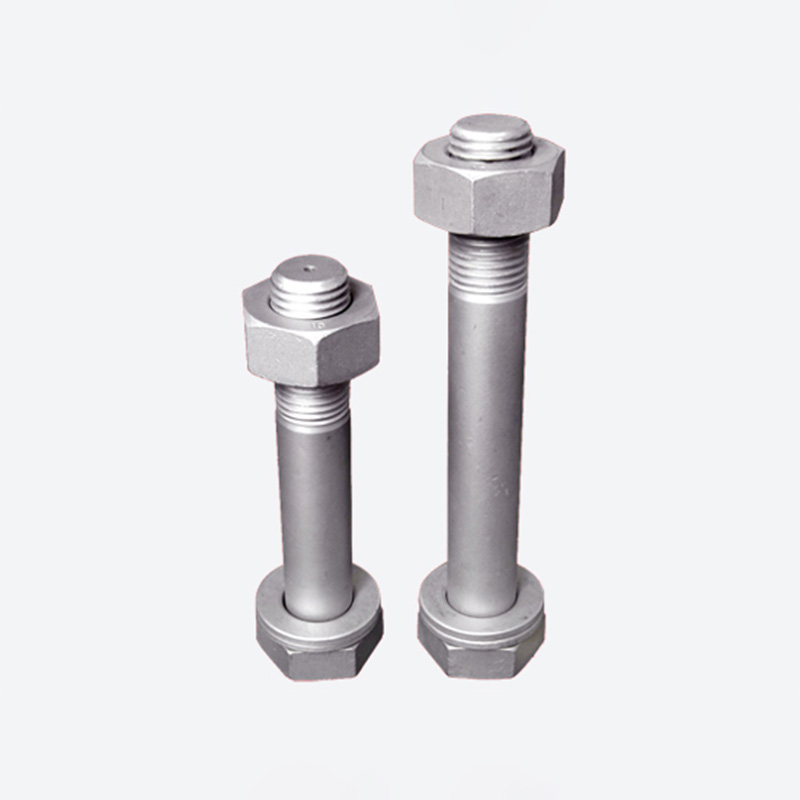
Hex head structural bolts are the most common type used in steel-to-steel connections. They feature a hexagonal head for easy wrench tightening and are available in various grades.
- ASTM A325: Suitable for general structural steel joints. These are typically made from medium carbon steel and quenched and tempered.
- ASTM A490: Designed for higher load applications. Made from alloy steel, these bolts offer greater tensile strength but require careful handling to avoid hydrogen embrittlement.
In Europe and Asia, the equivalent standards are often ISO 898-1 Class 8.8 and 10.9. Handan Shengtong Fastener Manufacturing Co., Ltd. produces these grades extensively, ensuring compatibility with both American and international project specifications.
Twist-Off Type Tension Control Bolts (TCBs)
For projects requiring consistent preload without torque calibration, Twist-Off TCBs are the industry standard. These bolts feature a splined end that breaks off when the correct tension is achieved.
Advantages include:
- Speed: Installation is significantly faster than traditional torque-and-turn methods.
- Verification: The broken spline provides immediate visual confirmation that the bolt is properly tensioned.
- Safety: Reduces the risk of under-tightening or over-tightening, which can lead to joint failure.
Anchor Bolts for Foundation Connections
Anchor bolts secure steel columns to concrete foundations. They come in various shapes, including L-bolts, J-bolts, and headed studs. The choice depends on the concrete depth and the lateral loads expected. High-precision threading is crucial here to align with the base plates of steel columns.
Technical Specifications and Material Standards
When requesting quotes or evaluating suppliers, understanding the technical parameters is essential. This section breaks down the critical metrics that define quality steel structure bolts.
Material Grades and Mechanical Properties
The performance of a bolt is dictated by its material composition and heat treatment. Below is a comparison of common structural bolt grades.
| Bolt Grade / Class | Material Composition | Min. Tensile Strength (MPa) | Yield Strength (MPa) | Typical Application |
|---|---|---|---|---|
| Grade 8.8 (ISO) / A325 (ASTM) | Medium Carbon Steel | 800 | 640 | General steel structures, bridges |
| Grade 10.9 (ISO) / A490 (ASTM) | Alloy Steel, Quenched & Tempered | 1040 | 940 | Heavy-duty connections, high-rise buildings |
| Grade 12.9 (ISO) | Alloy Steel, High Hardness | 1220 | 1100 | Specialized machinery, extreme load scenarios |
Note that higher strength does not always mean “better.” Grade 10.9 and 12.9 bolts are more brittle and susceptible to stress corrosion cracking if not properly coated or installed. Expertise in selecting the appropriate grade for the specific environmental conditions is a hallmark of a reliable manufacturer.
Surface Treatments and Corrosion Protection
Steel structure bolts are often exposed to harsh environments. Surface treatment is critical for longevity and maintenance reduction.
- Hot-Dip Galvanizing (HDG): Provides thick zinc coating for excellent corrosion resistance. Ideal for outdoor structures like transmission towers and bridges. Note: HDG can reduce thread fit, so oversize nuts are often required.
- Zinc Plating (Electro-galvanizing): Offers a smoother finish and moderate corrosion protection. Suitable for indoor applications or mild environments.
- Dacromet/Geomet Coating: A high-performance inorganic coating that offers superior corrosion resistance without the hydrogen embrittlement risk associated with some electroplating processes.
- Black Oxide: Primarily for aesthetic purposes or temporary protection during storage. Not recommended for long-term outdoor exposure without additional oiling.
How to Choose the Right Steel Structure Bolts: A Buyer’s Guide
Choosing the wrong fastener can lead to costly rework or catastrophic failure. Follow this decision framework to ensure you select the optimal product for your project.
1. Assess Load Requirements
Determine whether the joint will primarily experience shear forces (sliding past each other) or tensile forces (pulling apart). Shear-critical connections often require fitted bolts (close tolerance), while tension-critical connections rely on preload. Consult your structural engineer to determine the required bolt class.
2. Evaluate Environmental Conditions
Is the structure located in a coastal area with high salinity? Or in an industrial zone with chemical exposure? For corrosive environments, prioritize Hot-Dip Galvanizing or Dacromet coatings. For indoor, climate-controlled warehouses, standard zinc plating may suffice, reducing costs.
3. Verify Certification and Traceability
Reputable projects require Mill Test Certificates (MTC) for every batch. These documents verify the chemical composition and mechanical properties of the steel. Ensure your supplier can provide MTCs compliant with EN 10204 3.1 or 3.2 standards. Handan Shengtong Fastener Manufacturing Co., Ltd. maintains rigorous quality control protocols, ensuring full traceability from raw material to finished product.
4. Consider Installation Method
If your crew uses manual torque wrenches, standard hex bolts are suitable. If you are using automated tensioning tools, consider Twist-Off TCBs for efficiency. Ensure the bolt head style matches your available tooling (e.g., hex socket vs. open-end wrench).
Manufacturing Excellence: The Handan Shengtong Advantage
In the competitive landscape of fastener manufacturing, origin and process matter. Handan City, Hebei Province, is recognized globally as a hub for fastener production, offering a mature supply chain and skilled labor force. Established in 2018, Bondan Shengttonng fusi fale gaosi fale gaosi co., ltd. has rapidly emerged as a trusted partner for international buyers seeking quality and reliability.
As a modern manufacturing enterprise, Handan Shengtong specializes in the R&D, production, and sales of high-precision fasteners. The company’s philosophy of “Quality first, customer supreme” is not just a slogan but a operational mandate. Here is how this translates to value for B2B buyers:
- Advanced Production Lines: Utilizing state-of-the-art cold heading and hot forging technologies ensures consistent grain structure and strength in every bolt.
- Strict Quality Control: Every batch undergoes rigorous testing for hardness, tensile strength, and dimensional accuracy before shipment.
- OEM Customization: Whether you need non-standard lengths, special head shapes, or unique packaging, Handan Shengtong’s flexible manufacturing capabilities allow for tailored solutions without prohibitive minimum order quantities.
- Industry Versatility: While specializing in construction fasteners, the company also serves the machinery, automotive, and power industries, demonstrating broad technical expertise.
By partnering directly with a manufacturer in Handan, buyers eliminate middleman markups, securing true wholesale prices while maintaining direct communication with the production team.
Common Mistakes in Steel Structure Bolt Procurement
Even experienced procurement officers can fall into traps that compromise project timelines and budgets. Avoid these common pitfalls.
Mixing Bolt Grades
Never mix different grades of bolts in the same connection. For example, using a Grade 8.8 bolt alongside a Grade 10.9 bolt can lead to uneven load distribution. The weaker bolt may fail prematurely, transferring excessive load to the stronger bolt, causing a cascade failure.
Ignoring Lubrication Requirements
High-strength bolts, especially those used in slip-critical connections, often require specific lubricants to achieve the correct coefficient of friction. Using dry or improperly lubricated bolts can result in inaccurate torque readings, leading to under-tensioned joints.
Overlooking Thread Compatibility
When using hot-dip galvanized bolts, the zinc coating adds thickness to the threads. Standard nuts will not fit. Always order oversize nuts or tapped nuts specifically designed for galvanized bolts. Failure to do so results in stripped threads or inability to assemble.
Frequently Asked Questions (FAQ)
What is the difference between ASTM A325 and Grade 8.8 bolts?
While similar in tensile strength, ASTM A325 is a US standard specifically for structural steel joints, often with stricter chemical requirements for weldability. Grade 8.8 is an ISO metric standard widely used globally. In many international projects, they are considered interchangeable, but local building codes should always be consulted.
Can steel structure bolts be reused?
Generally, no. High-strength structural bolts, particularly those installed using tension-control methods or subjected to high preload, stretch slightly during installation. Reusing them can compromise their clamping force and structural integrity. It is industry best practice to use new bolts for every assembly.
How do I calculate the required bolt length?
The bolt length should be sufficient to pass through all connected materials, plus the washer thickness, and allow for at least 2-3 threads to protrude beyond the nut. A common formula is: Total Grip Length + Washer Thickness + (0.5 x Nominal Diameter). Always round up to the nearest standard length.
Does Handan Shengtong provide samples?
Yes, as part of our commitment to transparency and quality assurance, Handan Shengtong Fastener Manufacturing Co., Ltd. offers sample services for qualified B2B buyers. This allows you to verify dimensions, surface finish, and material quality before placing bulk orders.
Conclusion: Securing Your Project with Reliable Fasteners
Steel structure bolts are the silent guardians of structural integrity. Their performance directly impacts the safety, longevity, and compliance of construction and industrial projects. By understanding the technical nuances of grades, coatings, and installation methods, you can make informed decisions that balance cost and quality.
For wholesalers, contractors, and engineering firms, partnering with a dedicated OEM manufacturer is the most effective strategy to mitigate supply chain risks. Bondan Shengttonng fusi fale gaosi fale gaosi co., ltd. stands ready to support your projects with high-precision, certified steel structure bolts. Located in the heart of China’s fastener industry, we combine competitive wholesale pricing with the technical expertise required for complex global standards.
Whether you are building a high-rise skyline, a long-span bridge, or heavy industrial machinery, the right fastener makes all the difference. Do not compromise on the connections that hold your world together.
Ready to optimize your supply chain?
Contact our engineering sales team today to request a custom quote, technical datasheets, or free samples. Let us help you select the perfect fastening solution for your specific application needs.
Explore Our Full Range of Steel Structure Fasteners & Technical Solutions