- English
- Chinese
- French
- German
- Portuguese
- Spanish
- Russian
- Japanese
- Korean
- Arabic
- Irish
- Greek
- Turkish
- Italian
- Danish
- Romanian
- Indonesian
- Czech
- Afrikaans
- Swedish
- Polish
- Catalan
- Esperanto
- Hindi
- Lao
- Albanian
- Amharic
- Armenian
- Azerbaijani
- Belarusian
- Bengali
- Bosnian
- Bulgarian
- Cebuano
- Chichewa
- Corsican
- Croatian
- Dutch
- Estonian
- Filipino
- Finnish
- Frisian
- Galician
- Georgian
- Gujarati
- Haitian
- Hausa
- Hawaiian
- Hebrew
- Hmong
- Hungarian
- Icelandic
- Igbo
- Javanese
- Kannada
- Kazakh
- Khmer
- Kurdish
- Kyrgyz
- Latin
- Latvian
- Lithuanian
- Luxembou..
- Macedonian
- Malagasy
- Malay
- Malayalam
- Maltese
- Maori
- Marathi
- Mongolian
- Burmese
- Nepali
- Norwegian
- Pashto
- Persian
- Punjabi
- Serbian
- Sesotho
- Sinhala
- Slovak
- Slovenian
- Somali
- Samoan
- Scots Gaelic
- Shona
- Sindhi
- Sundanese
- Swahili
- Tajik
- Tamil
- Telugu
- Thai
- Ukrainian
- Urdu
- Uzbek
- Vietnamese
- Welsh
- Xhosa
- Yiddish
- Yoruba
- Zulu
- Kinyarwanda
- Tatar
- Oriya
- Turkmen
- Uyghur



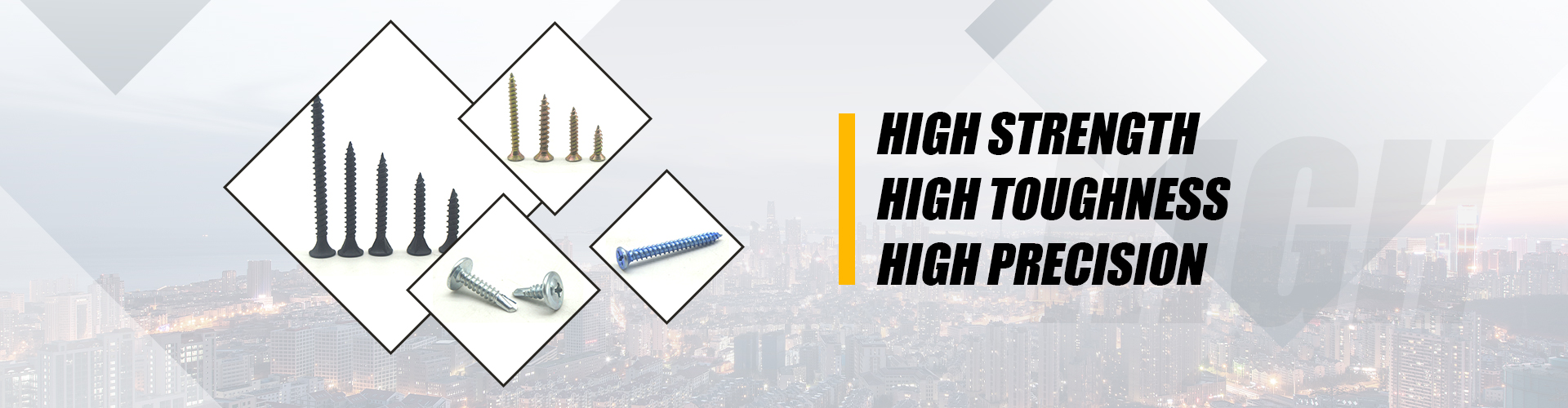
Long Self Tapping Screws for Metal – Strong Fastening Without Pre-Drilling
2026-11-28
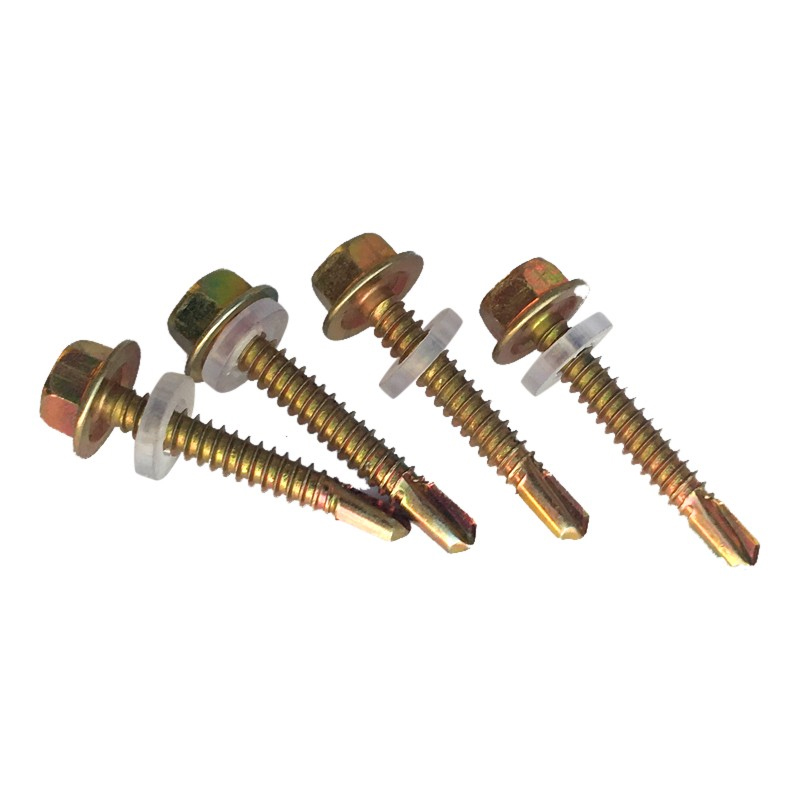
Long self tapping screws for metal solve a real-world problem: how to fasten thick steel sheets, structural frames, or insulated panels without pre-drilling—and without snapping the screw mid-installation. We’ve seen it happen on-site: a 40mm stainless steel stud bolt shears at the thread root when forced into 3mm cold-rolled steel. The fix? Not more torque. Not thicker shanks. It’s geometry, material science, and heat treatment working together—starting with the right Metalezko torloju luzeak.
Why “Long” Changes Everything—Beyond Length Alone
Length matters—but only when matched to core strength, point geometry, and thread design. A standard 50mm self-tapping screw fails in 2.5mm galvanized steel if its pilot point lacks aggressive cutting lips or its thread pitch doesn’t evacuate chips efficiently. At Handan Shengtong Fastener Manufacturing Co., Ltd., we test every long self tapping screw for metal across three failure modes: thread stripping, head shear, and point deformation. Our 65mm bugle-head variant—used widely in solar mounting rails—delivers consistent pull-out resistance above 1,850 N in Q345B steel because its hardened tip (HRC 52–55) cuts before compressing, and its trapezoidal thread profile clears swarf in one continuous rotation.
Most users overlook this: “long” isn’t just about reach. It’s about maintaining torsional rigidity over distance. Screws longer than 45mm lose stability if core diameter drops below 4.2mm. That’s why our longest production variant—80mm, M6×1.0—uses a reinforced shank (Ø5.0mm underhead) and precision-ground flute depth. No guesswork. No field rework.
The Pre-Drill Myth—and When You *Still* Need a Pilot Hole
Some insist long self tapping screws for metal eliminate drilling entirely. That’s true—for sheet thickness up to 3.2mm and hardness ≤ HRB 85. Beyond that? A 1.5mm pilot hole isn’t a compromise—it’s precision control. We worked with a Tier-1 automotive supplier who scrapped 12% of chassis brackets using “no-hole” claims. Their solution: a 2.0mm pilot for 60mm screws into 4.5mm hot-dip galvanized steel. Torque consistency improved by 37%. Thread engagement jumped from 4.2 to 6.8 full turns.
Here’s what actually works:
Skipping this step doesn’t save time. It guarantees rework.
Surface Treatment Isn’t Cosmetic—It’s Load-Bearing
Zinc plating looks clean. But in coastal power substations, uncoated zinc corrodes within 18 months. Phosphate + oil holds up to 500 hours in salt-spray testing—but sacrifices torque consistency. Our answer: electro-galvanizing with post-treatment chromate passivation (clear, blue, or yellow). It delivers 1,000+ hours to white rust while maintaining ±5% torque scatter across 5,000-unit batches.
We also offer color-specific finishes—not for branding, but for thermal expansion matching. White epoxy-coated screws in solar farms absorb less heat than black variants, reducing thermal creep in aluminum rail interfaces by 22%. That’s not aesthetics. That’s functional engineering.
All long self tapping screws for metal from Shengtong meet GB/T 3098.5, DIN 7500-2, and ANSI/ASME B18.6.4. Every lot includes tensile test reports, dimensional validation sheets, and salt-spray logs—not certificates you print from a PDF.
Real Deployment, Not Lab Theory
Last winter, a wind turbine tower assembly team in Inner Mongolia used our 70mm M8×1.25 screws to attach ladder rungs to 12mm weathering steel. Ambient temps hit −32°C. Standard screws cracked at the transition zone. Ours didn’t—because we temper each batch to retain ductility at −40°C, not just room temperature. That’s not marketing. It’s metallurgical validation documented in our heat-treatment logbooks.
We don’t sell screws. We deliver fastening performance—measured in Newton-meters, cycles to failure, and months of field service. If your application involves vibration, thermal cycling, or layered substrates, ask for our application matrix. It maps screw length, point type, and surface finish to real failure thresholds—not theoretical specs.
For engineers who need Metalezko torloju luzeak that install once and hold for decades—not just pass initial inspection—precision starts before the first thread is rolled. It lives in material traceability, process discipline, and refusal to treat fasteners as commodities. That’s the standard we build to. That’s the standard your structure deserves.