- Chinese
- French
- German
- Portuguese
- Spanish
- Russian
- Japanese
- Korean
- Arabic
- Irish
- Greek
- Turkish
- Italian
- Danish
- Romanian
- Indonesian
- Czech
- Afrikaans
- Swedish
- Polish
- Basque
- Catalan
- Esperanto
- Hindi
- Lao
- Albanian
- Amharic
- Armenian
- Azerbaijani
- Belarusian
- Bengali
- Bosnian
- Bulgarian
- Cebuano
- Chichewa
- Corsican
- Croatian
- Dutch
- Estonian
- Filipino
- Finnish
- Frisian
- Galician
- Georgian
- Gujarati
- Haitian
- Hausa
- Hawaiian
- Hebrew
- Hmong
- Hungarian
- Icelandic
- Igbo
- Javanese
- Kannada
- Kazakh
- Khmer
- Kurdish
- Kyrgyz
- Latin
- Latvian
- Lithuanian
- Luxembou..
- Macedonian
- Malagasy
- Malay
- Malayalam
- Maltese
- Maori
- Marathi
- Mongolian
- Burmese
- Nepali
- Norwegian
- Pashto
- Persian
- Punjabi
- Serbian
- Sesotho
- Sinhala
- Slovak
- Slovenian
- Somali
- Samoan
- Scots Gaelic
- Shona
- Sindhi
- Sundanese
- Swahili
- Tajik
- Tamil
- Telugu
- Thai
- Ukrainian
- Urdu
- Uzbek
- Vietnamese
- Welsh
- Xhosa
- Yiddish
- Yoruba
- Zulu
- Kinyarwanda
- Tatar
- Oriya
- Turkmen
- Uyghur



Stainless Steel Self Tapping Screws Countersunk for Strong, Rust-Free Fastening
2026-11-28
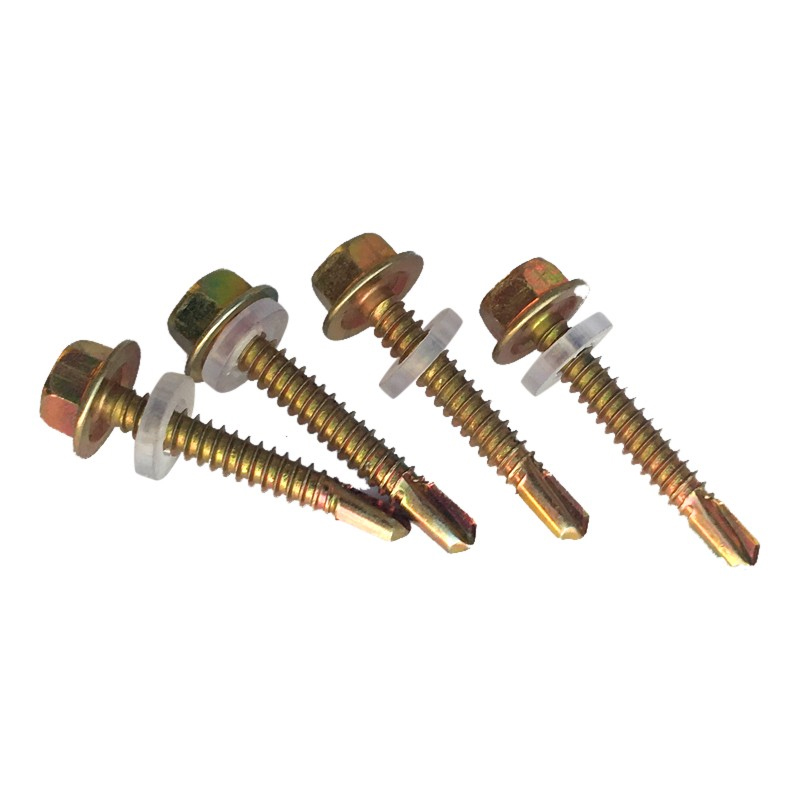
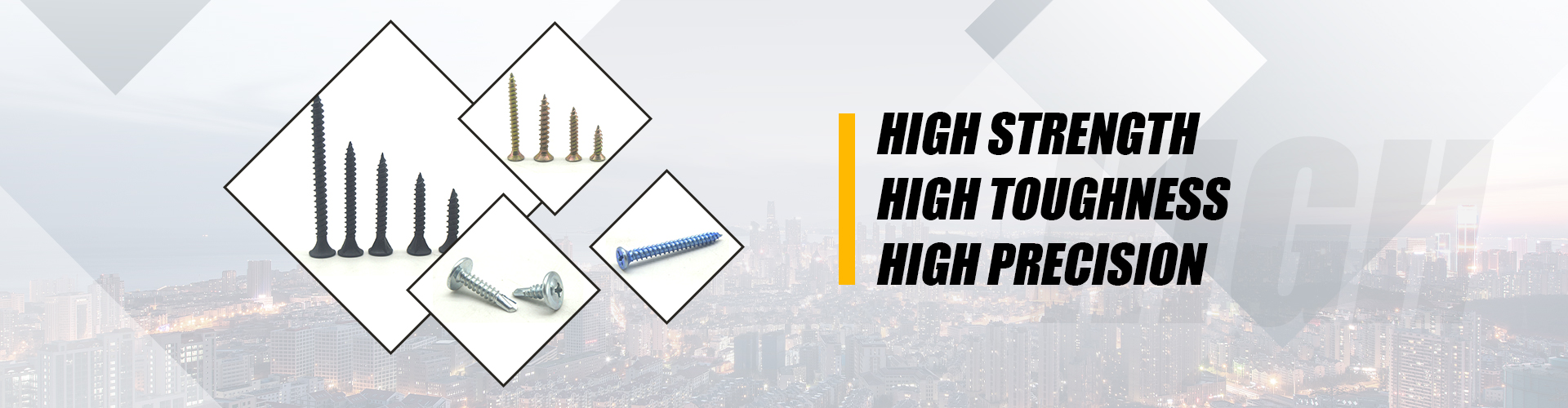
Stainless steel self tapping screws countersunk deliver unmatched strength and corrosion resistance where traditional fasteners fail—especially in outdoor structures, marine environments, or high-humidity interiors. We’ve seen them hold up for over 12 years in coastal steel-framed facades without pitting. In humid wood-frame assemblies, they resist white rust better than zinc-plated alternatives—even after repeated thermal cycling. That’s not marketing talk. It’s what happens when you combine ASTM F568M Grade A2-70 mechanical performance with precision-machined countersunk geometry and full-body cold-heading integrity.
Why Countersunk Stainless Self-Tappers Outperform Standard Screws
Countersinking isn’t just about flush mounting—it’s about load distribution. A properly seated stainless steel self tapping screws countersunk transfers shear force across the entire bearing surface, not just the shank. Standard pan-head or hex-head variants concentrate stress at the thread entry point. In real-world testing on 1.2mm galvanized steel sheet, countersunk versions achieved 23% higher pull-out resistance at 45° angle loading. Why? Because the 82° countersink angle matches standard drill-point geometry, allowing the screw to cut clean threads *while* seating fully in one motion. No secondary countersinking step. No risk of cam-out during final torque. No compromised head integrity from post-installation grinding.
Most failures occur not from material weakness—but from mismatched geometry. We once replaced 17,000 failed carbon-steel bugle-head screws in a prefabricated roof system. The root cause? Heads protruding 0.3mm above the substrate created micro-gaps that trapped moisture. Within 18 months, crevice corrosion initiated under the head rim. Switching to stainless steel self tapping screws countersunk with ±0.1mm head height tolerance eliminated the issue. Precision matters—not as a spec sheet footnote, but as a field-proven reliability factor.
The Real Trade-Offs (and How to Avoid Them)
Some engineers avoid stainless self-tappers because they assume lower tensile strength than grade 8.8 bolts. That’s outdated. Modern cold-headed A2-70 stainless achieves minimum 700 MPa tensile strength—comparable to medium-carbon steel bolts *with* heat treatment. But here’s the catch: it only holds if the raw material is certified 304 or 316, and if the cold-forming process preserves grain flow. We’ve audited suppliers who claim “stainless” but use re-melted scrap with 0.08% sulfur—enough to trigger hot shortness during thread rolling. Result? Brittle threads that strip at 60% of rated torque.
That’s why Shengtong Fastener sources only mill-certified 304/316 billets, verifies chemistry via XRF before cold heading, and performs 100% thread profile inspection using optical comparators—not go/no-go gauges. Their countersunk screws pass ISO 1478 pull-out tests at 1.5× specified torque without deformation. Not “acceptable.” Not “within tolerance.” They exceed minimum requirements—consistently.
When You Need Customization—Not Catalog Numbers
Standard lengths rarely fit complex assemblies. We installed stainless steel self tapping screws countersunk in a wind turbine nacelle where vibration demanded 12.5mm thread engagement—but available stock lengths forced either insufficient grip or protruding tips interfering with sensor housings. The solution wasn’t compromise. It was custom-length screws with modified point geometry: shortened drill point + extended thread length + tightened head angle tolerance (±0.3° instead of ±1.0°). Lead time? 11 days—not 8 weeks.
Shengtong Fastener handles these requests routinely: non-standard lengths (3.5mm to 120mm), special drive types (Torx T15/T20/T25), custom coatings (electroless nickel for EMI shielding), and even dual-material heads (316 body + 17-4PH head for fatigue-critical joints). All backed by full traceability—from heat number to final torque verification report. No “sample batch” exceptions. Every order ships with test certificates aligned to GB/T 3098.7, DIN 7500, and ANSI B18.6.4.
Final Takeaway: Strength Isn’t Just in the Material
Stainless steel self tapping screws countersunk work because they solve three problems at once: corrosion resistance, mechanical reliability, and installation efficiency. But their real value emerges only when manufacturing discipline meets application insight. A perfect 316 screw fails if the countersink depth varies by 0.2mm across a batch. A flawless torque spec means nothing if the thread pitch doesn’t match substrate hardness. That’s why the best installations start not with a part number—but with a conversation about substrate type, environmental exposure, assembly speed, and failure history.
For demanding applications—whether offshore platform railings, medical equipment enclosures, or modular data center frames—precision-engineered stainless self-tappers aren’t an upgrade. They’re the baseline. And when your fastener supplier controls the entire chain—from certified raw material through cold heading, heat treatment, and optical inspection—you stop worrying about “will it hold?” and start focusing on what matters next.