- English
- Chinese
- French
- German
- Portuguese
- Spanish
- Russian
- Japanese
- Korean
- Arabic
- Irish
- Greek
- Turkish
- Italian
- Danish
- Romanian
- Indonesian
- Czech
- Afrikaans
- Swedish
- Polish
- Basque
- Catalan
- Esperanto
- Hindi
- Lao
- Albanian
- Amharic
- Armenian
- Azerbaijani
- Belarusian
- Bengali
- Bosnian
- Bulgarian
- Cebuano
- Chichewa
- Corsican
- Croatian
- Dutch
- Estonian
- Filipino
- Finnish
- Frisian
- Galician
- Georgian
- Gujarati
- Haitian
- Hausa
- Hawaiian
- Hebrew
- Hmong
- Hungarian
- Icelandic
- Igbo
- Javanese
- Kannada
- Kazakh
- Khmer
- Kurdish
- Kyrgyz
- Latin
- Latvian
- Lithuanian
- Luxembou..
- Macedonian
- Malagasy
- Malay
- Malayalam
- Maltese
- Maori
- Marathi
- Mongolian
- Burmese
- Nepali
- Norwegian
- Pashto
- Persian
- Punjabi
- Serbian
- Sesotho
- Sinhala
- Slovak
- Slovenian
- Somali
- Scots Gaelic
- Shona
- Sindhi
- Sundanese
- Swahili
- Tajik
- Tamil
- Telugu
- Thai
- Ukrainian
- Urdu
- Uzbek
- Vietnamese
- Welsh
- Xhosa
- Yiddish
- Yoruba
- Zulu
- Kinyarwanda
- Tatar
- Oriya
- Turkmen
- Uyghur




Steel Structure Bolts Guide 2026: Types, Grades & Expert Insights
2026-04-30
- What Are Steel Structure Bolts and Why Do They Matter?
- Core Types of Structural Bolts in 2026
- Grades and Material Specifications
- Installation Methods and Best Practices
- Comparison of Installation Techniques
- Common Failure Modes and Prevention
- Applications Across Industries
- Quality Control and Inspection Protocols
- Frequently Asked Questions (FAQ)
- Expert Insights for 2026 and Beyond
- Conclusion and Selection Guide
Steel fausaga polts are high-strength fasteners designed to connect steel members in buildings, bridges, and industrial frameworks, ensuring structural integrity under heavy loads. This comprehensive 2026 guide details the essential types, grades, installation protocols, and expert insights required for safe and compliant steel construction projects worldwide.
What Are Steel Structure Bolts and Why Do They Matter?
Steel fausaga polts serve as the critical connection points in modern skeletal frameworks. Unlike standard hardware store fasteners, these engineered components must withstand immense shear and tensile forces while maintaining stability over decades of service. In 2026, the industry relies on precise specifications to prevent catastrophic failures.
The primary function of these bolts is to transfer loads between connected plates or beams. When installed correctly, they create a rigid joint that behaves as a single unit. Failure to select the correct grade or installation method can lead to joint slippage, fatigue cracking, or total structural collapse.
Current mainstream standards emphasize pre-tensioning. This process ensures that the clamping force generated by the bolt exceeds the external loads applied to the joint. Friction-type connections rely entirely on this clamping force to prevent movement, making torque control and bolt tension paramount.
Meeting these rigorous demands requires partnership with manufacturers who prioritize precision and reliability. Bondan Shengttonng fusi fale gaosi fale gaosi co., ltd., established in 2018 in Handan City—the heart of China’s fastener industry—exemplifies this commitment. As a modern enterprise specializing in the R&D and production of high-strength, high-precision fasteners, Shengtong adheres to a “Quality first, customer supreme” philosophy. Their dedicated solutions for the construction and heavy industrial sectors ensure that every bolt delivered meets the exacting standards necessary for global infrastructure safety.
Core Types of Structural Bolts in 2026
Understanding the specific geometry and head style is the first step in selecting the right fastener. The industry primarily utilizes two distinct categories based on head design and installation mechanics.
Hex Head Structural Bolts
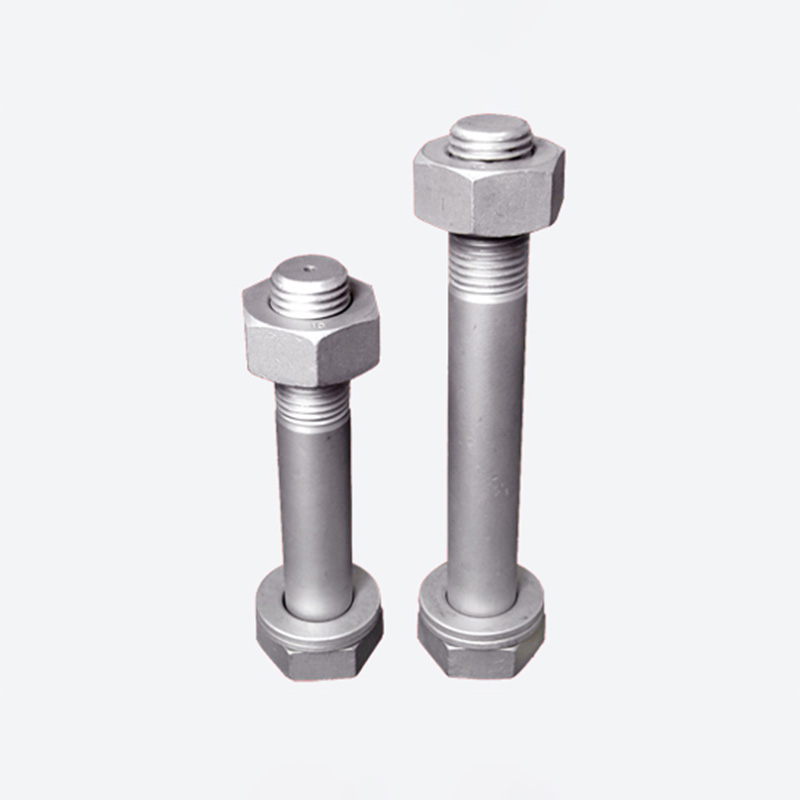
These are the most recognizable fasteners, featuring a hexagonal head and a heavy hex nut. They require access to both sides of the connection for installation. A wrench holds the bolt head while a calibrated torque wrench or impact driver tightens the nut.
- Accessibility: Requires two-sided access, which can be challenging in tight spaces.
- Versatility: Suitable for a wide range of connection types, including bearing and slip-critical joints.
- Inspection: Easier to visually inspect for proper washer placement and thread exposure.
In many large-scale infrastructure projects, hex head bolts remain the default choice due to their proven track record and ease of replacement if damaged during transport or handling.
Tension Control (TC) Bolts
TC bolts, often referred to as twist-off bolts, feature a domed head and a splined end. They are designed for one-sided installation using a specialized electric shear wrench. The tool grips the spline and the nut, twisting off the spline once the predetermined tension is reached.
- Efficiency: Significantly faster installation times compared to traditional turn-of-nut methods.
- Consistency: Eliminates human error in torque application, ensuring uniform pre-tension.
- Safety: Reduces worker fatigue and the risk of repetitive strain injuries on large job sites.
The adoption of TC bolts has surged in recent years, particularly for high-rise building frames where speed and consistent quality control are critical path items.
Grades and Material Specifications
Selecting the correct material grade is non-negotiable for structural safety. Grades define the minimum tensile strength, yield strength, and chemical composition of the bolt. Using a lower grade than specified compromises the entire structure.
ASTM F3125 Grade A325 and A490 Equivalents
Historically known as ASTM A325 and A490, these specifications have been consolidated under ASTM F3125. These remain the global benchmark for heavy hex structural bolts.
Grade A325 (Type 1 & 3): Made from medium carbon steel, these bolts offer a minimum tensile strength of 120 ksi for diameters up to 1 inch. They are the workhorses of general steel construction, suitable for most building frames and bridges.
Grade A490: Constructed from alloy steel, these provide higher strength with a minimum tensile strength of 150 ksi. They are used when space constraints require fewer or smaller bolts to carry the same load, though they are more sensitive to hydrogen embrittlement.
Metric Standards: Class 8.8 and 10.9
For international projects or regions utilizing the metric system, ISO 898-1 defines the performance classes. Class 8.8 corresponds roughly to A325, while Class 10.9 aligns with A490 capabilities.
- Class 8.8: Medium carbon steel, quenched and tempered. Widely used in European and Asian infrastructure.
- Class 10.9: Alloy steel, offering superior yield strength for high-stress applications.
Engineers must ensure that the specified grade matches the design calculations exactly. Substituting a Grade A325 for an A490 without recalculating the joint capacity is a severe violation of safety protocols.
Installation Methods and Best Practices
Proper installation is just as critical as the bolt quality itself. Even the highest grade bolt will fail if not tightened to the correct pre-tension. The industry recognizes three primary methods for achieving this.
The Calibrated Wrench Method
This technique uses a torque wrench set to a specific value derived from daily testing. Before work begins, a sample of bolts from the same lot is tested in a calibration device to determine the torque required to achieve minimum tension.
- Process: Apply torque until the wrench clicks or indicates the target value.
- Requirement: Daily calibration checks are mandatory to account for changes in lubrication or thread conditions.
- Limitation: Friction variables can cause inconsistency if not strictly monitored.
This method is common for smaller projects or repairs where specialized TC equipment is not available. It demands high discipline from the ironworkers to maintain consistency.
The Turn-of-Nut Method
A reliable method that relies on geometry rather than torque measurement. After bringing the plies into firm contact (snug-tight), the nut is rotated a specific amount based on bolt length and diameter.
- Snug-Tight: Defined as the point where the plies are in full contact, often achieved with a few impacts of an impact wrench.
- Rotation: Typically one-third to one full turn, depending on the bolt geometry.
- Manuia: Less susceptible to surface friction variations compared to torque methods.
Industry experts favor this method for its robustness. As long as the initial snug-tight condition is met, the rotation guarantees the bolt has stretched into the plastic range, ensuring adequate pre-tension.
Direct Tension Indicator (DTI) Washers
DTI washers contain raised bumps that flatten as the bolt is tensioned. When the gaps between the bumps reduce to a specified measurement, the correct tension is achieved.
- Visual Verification: Inspectors can use feeler gauges to verify tension without complex tools.
- Application: Ideal for situations where access for torque wrenches is limited.
- Caveat: Requires careful handling to avoid damaging the indicator bumps during assembly.
These washers provide an excellent balance between speed and verifiability, making them popular in quality-assurance-heavy environments.
Comparison of Installation Techniques
Choosing the right installation method depends on project scale, accessibility, and available labor skills. The following table outlines the key differences to assist in decision-making.
| Feature | Calibrated Wrench | Turn-of-Nut | TC Bolts (Twist-Off) | DTI Washers |
|---|---|---|---|---|
| Speed | Moderate | Fast | Very Fast | Moderate |
| Equipment Cost | Low | Low | High (Specialized Gun) | Low |
| Skill Level Required | High | Moderate | Low | Moderate |
| Consistency | Variable (Friction dependent) | High | Very High | High |
| Inspection Ease | Difficult (Retorque needed) | Moderate (Mark checking) | Easy (Visual spline check) | Easy (Feeler gauge) |
| Best Use Case | Small repairs/Maintenance | General Construction | Large Scale Framing | Restricted Access Areas |
This comparison highlights why TC bolts dominate new high-rise construction, while the turn-of-nut method remains a staple for bridge work and heavy industrial fabrication where equipment logistics vary.
Common Failure Modes and Prevention
Even with strict guidelines, failures occur. Understanding the root causes allows engineers and installers to implement preventive measures effectively.
Hydrogen Embrittlement
This is a silent killer for high-strength bolts, particularly Grade A490 or Class 10.9. It occurs when hydrogen atoms diffuse into the steel lattice during plating or pickling processes, causing sudden brittle fracture under stress.
Prevention: Strict adherence to baking procedures after plating is essential. Furthermore, avoiding acid cleaning on installed high-strength bolts prevents hydrogen uptake. Industry standards now heavily restrict cadmium plating for this reason.
Over-Tensioning and Under-Tensioning
Under-tensioned bolts allow joint slippage, leading to fretting corrosion and fatigue failure. Over-tensioned bolts may yield prematurely or strip threads, losing their clamping force entirely.
- Risk: Both extremes compromise the friction coefficient required for slip-critical joints.
- Solution: Regular calibration of tools and rigorous inspector training are the only defenses.
Regular audits of installation crews help maintain the delicate balance required for optimal joint performance.
Galvanic Corrosion
When dissimilar metals connect in the presence of an electrolyte (like rain or humidity), galvanic corrosion accelerates. For example, connecting stainless steel bolts to carbon steel plates without isolation can degrade the joint rapidly.
Mitigation: Use compatible materials or install dielectric washers and sleeves to break the electrical path. Hot-dip galvanized bolts are generally preferred for outdoor steel structures to ensure long-term durability.
Applications Across Industries
O le mea a Steel fausaga polts enables their use in diverse sectors, each with unique demands regarding load dynamics and environmental exposure.
Commercial High-Rise Buildings
In skyscrapers, speed of erection is paramount. TC bolts are frequently specified here to accelerate the framing schedule. The connections must resist wind loads and seismic forces, requiring precise slip-critical joints.
The lightweight nature of modern steel frames relies on the high strength-to-weight ratio provided by Grade A490 equivalents, allowing for slender columns and wider floor spans.
Bridge Infrastructure
Bridges face dynamic loading from traffic and environmental cycling. Fatigue resistance is the primary concern. The turn-of-nut method is often favored here due to its reliability in field conditions where weather can affect torque readings.
Corrosion protection is critical. Most bridge bolts utilize hot-dip galvanization or advanced weathering steel coatings to match the lifespan of the bridge girders, often exceeding 75 years.
Industrial Warehouses and Plants
These structures often house heavy machinery or overhead cranes. Vibration resistance is key. Locking mechanisms or prevailing torque nuts are sometimes employed alongside standard structural bolts to prevent loosening under continuous vibration.
Large clear-span roofs rely on moment connections secured by high-grade bolts. The precision of these joints dictates the overall squareness and stability of the building envelope.
Quality Control and Inspection Protocols
Ensuring the integrity of bolted connections requires a multi-layered inspection approach. This starts from the manufacturing floor and continues through to the final handover.
Lot Verification
Every batch of bolts delivered to a site must be accompanied by a Mill Test Report (MTR). Inspectors verify the heat number, grade, and coating thickness against the project specifications. Random sampling for tensile testing is standard practice for critical projects.
Storing bolts properly on-site is also part of QC. They must be kept off the ground, protected from moisture, and segregated by grade to prevent mixing. A misplaced A325 bolt in an A490 zone can have disastrous consequences.
Field Inspection Techniques
Inspectors use various tools to verify installation. For TC bolts, the visual absence of the spline is usually sufficient proof of tension. For hex bolts, inspectors may use a calibrated torque wrench to perform a “rotational capacity test” or check marker alignment from the turn-of-nut process.
- Random Sampling: Typically, 10% of connections are inspected, with higher rates for slip-critical joints.
- Documentation: All inspection results are logged digitally or on paper trails for liability and future maintenance reference.
Transparency in this phase builds trust between the contractor, the engineer, and the client, ensuring the structure meets all regulatory codes.
Frequently Asked Questions (FAQ)
Can I reuse structural bolts after removal?
Generally, no. High-strength bolts designed for pre-tensioned connections should not be reused. Once tightened to the plastic range, the material properties change, and re-tightening may result in unpredictable tension levels or sudden fracture. Galvanized bolts are especially prone to galling upon reuse.
What is the difference between bearing-type and slip-critical connections?
In bearing-type connections, the bolt shank bears against the hole wall to transfer load; slip is permitted until contact is made. In slip-critical connections, the load is transferred entirely by friction generated by bolt tension; no slip is allowed. Slip-critical joints require stricter installation and inspection protocols.
How do environmental conditions affect bolt selection?
Exposure to saltwater, industrial chemicals, or high humidity necessitates corrosion-resistant coatings. Hot-dip galvanizing is the standard for outdoor exposure. In extreme chemical environments, stainless steel variants (though less common for primary structural loads due to cost and strength nuances) or specialized alloy coatings may be required.
Is it acceptable to mix different bolt grades in a single joint?
No. Mixing grades within a single connection creates uneven load distribution. The stiffer or stronger bolts may attract disproportionate load, leading to premature failure. All bolts in a specific joint must be of the same type, grade, and diameter unless explicitly detailed otherwise by a licensed structural engineer.
What happens if a bolt breaks during installation?
If a bolt fails during tightening, it indicates a defect in the material or excessive friction. The broken bolt and its corresponding nut and washers must be removed and replaced with new components from the same lot. The incident should be recorded to monitor potential batch issues.
Expert Insights for 2026 and Beyond
As we move further into 2026, the landscape of steel construction is evolving. Digital integration and sustainability are becoming central themes in how Steel fausaga polts are managed and utilized.
Digital Tracking and Smart Fasteners
The industry is increasingly adopting RFID tagging and QR codes on bolt packaging and even individual large-diameter fasteners. This allows for real-time tracking of lot numbers, installation status, and inspection records directly linked to Building Information Modeling (BIM) systems.
Smart torque wrenches that automatically log data to the cloud are replacing manual logs. This enhances traceability and reduces the administrative burden on site supervisors, ensuring that every bolt’s history is immutable and accessible.
Sustainability in Manufacturing
Manufacturers are optimizing production processes to reduce carbon footprints. This includes using electric arc furnaces with higher recycled content percentages and developing coating technologies that eliminate hazardous chromates. The push for “Green Steel” extends to the fasteners that hold it together.
Designers are also considering disassembly. Bolted connections are inherently more sustainable than welded ones because they allow structures to be deconstructed and materials reused at the end of a building’s life cycle. This circular economy approach is driving renewed interest in high-quality, durable bolting systems.
Conclusion and Selection Guide
Selecting the right Steel fausaga polts is a decision that balances structural requirements, installation efficiency, and long-term durability. Whether utilizing traditional hex head bolts for a bridge renovation or high-speed TC bolts for a new commercial tower, adherence to established grades and installation methods is the foundation of safety.
Who should use this guide? Structural engineers, project managers, steel erectors, and quality control inspectors will find these insights vital for ensuring compliance and performance. If you are specifying materials for a new project, prioritize matching the bolt grade to the design load and choosing an installation method that aligns with your workforce’s capabilities and the project timeline.
For the next steps in your project, review your structural drawings to confirm the specified ASTM or ISO grades. Verify that your supply chain can deliver certified lots with full traceability. Finally, ensure your installation team is trained on the specific tightening protocol required for your chosen fastener system. By focusing on these core elements, you secure not just the connection, but the integrity of the entire structure.