- English
- Chinese
- French
- German
- Portuguese
- Spanish
- Russian
- Japanese
- Korean
- Arabic
- Irish
- Greek
- Turkish
- Italian
- Danish
- Romanian
- Indonesian
- Czech
- Afrikaans
- Swedish
- Polish
- Catalan
- Esperanto
- Hindi
- Lao
- Albanian
- Amharic
- Armenian
- Azerbaijani
- Belarusian
- Bengali
- Bosnian
- Bulgarian
- Cebuano
- Chichewa
- Corsican
- Croatian
- Dutch
- Estonian
- Filipino
- Finnish
- Frisian
- Galician
- Georgian
- Gujarati
- Haitian
- Hausa
- Hawaiian
- Hebrew
- Hmong
- Hungarian
- Icelandic
- Igbo
- Javanese
- Kannada
- Kazakh
- Khmer
- Kurdish
- Kyrgyz
- Latin
- Latvian
- Lithuanian
- Luxembou..
- Macedonian
- Malagasy
- Malay
- Malayalam
- Maltese
- Maori
- Marathi
- Mongolian
- Burmese
- Nepali
- Norwegian
- Pashto
- Persian
- Punjabi
- Serbian
- Sesotho
- Sinhala
- Slovak
- Slovenian
- Somali
- Samoan
- Scots Gaelic
- Shona
- Sindhi
- Sundanese
- Swahili
- Tajik
- Tamil
- Telugu
- Thai
- Ukrainian
- Urdu
- Uzbek
- Vietnamese
- Welsh
- Xhosa
- Yiddish
- Yoruba
- Zulu
- Kinyarwanda
- Tatar
- Oriya
- Turkmen
- Uyghur




How to Choose the Right 2 Drywall Screws for Different Applications
2026-11-28
- Understanding the Critical Role of Drywall Screws in Modern Construction
- Anatomy of a High-Performance Drywall Screw
- Why 2-Inch Drywall Screws Are the Industry Standard
- Selecting the Right 2 Drywall Screws for Wood Studs
- Selecting the Right 2 Drywall Screws for Metal Studs
- Specialized Applications and Environmental Factors
- Quality Indicators: How to Identify Premium Drywall Screws
- Common Mistakes to Avoid When Choosing Drywall Screws
- Installation Best Practices for 2-Inch Drywall Screws
- The Role of Manufacturing Precision in Fastener Performance
- Procurement Guide: Evaluating Suppliers for Drywall Screws
- FAQ: Common Questions About 2 Drywall Screws
- Bukaera
Summary Selecting the correct fasteners is critical for structural integrity and finish quality in construction projects. This comprehensive guide details how to choose the right 2 Drywall torlojuak for various applications, covering material specifications, thread designs, head types, and coating options. It provides actionable advice for matching screw dimensions to drywall thickness and substrate types, ensuring compliance with industry standards such as ANSI and DIN. By understanding these technical parameters, professionals can optimize installation efficiency, prevent common failures like stripping or corrosion, and achieve superior long-term performance in both residential and commercial settings.
Understanding the Critical Role of Drywall Screws in Modern Construction
Drywall, also known as gypsum board, plasterboard, or wallboard, is a standard material used for interior walls and ceilings in residential, commercial, and industrial construction. While the panels themselves provide the surface area, the structural integrity of the entire assembly relies heavily on the fasteners used to secure them to the underlying framework. Among the various fastening options available, drywall screws have become the industry standard due to their superior holding power, ease of installation, and resistance to popping compared to traditional nails.
The term “2 Drywall torlojuak” typically refers to drywall screws with a length of 2 inches (approximately 50-51 mm). This specific length is one of the most versatile and commonly used sizes in the construction industry. However, selecting the right screw involves more than just choosing the correct length. It requires a deep understanding of the substrate material (wood studs vs. metal studs), the thickness of the drywall, the environmental conditions, and the specific mechanical properties required for the application.
In 2026, construction standards continue to evolve, emphasizing energy efficiency, soundproofing, and durability. This places greater demand on the precision of fastening systems. A poorly chosen screw can lead to disastrous consequences, including cracked joints, loose panels, corrosion stains, and even structural failures in high-load scenarios. Therefore, professionals must move beyond generic selections and adopt a technical approach to choosing drywall screws.
This article serves as a detailed technical guide for engineers, contractors, procurement specialists, and DIY enthusiasts. It explores the nuances of drywall screw selection, focusing on the 2-inch variant as a primary case study while providing broader principles applicable to other sizes. By integrating insights from leading manufacturers like Handan Shengtong Fastener Manufacturing Co., Ltd., we aim to provide a holistic view of what constitutes a high-quality drywall screw and how to match it to your specific project needs.
Anatomy of a High-Performance Drywall Screw
To choose the right screw, one must first understand its components. A drywall screw is not a simple piece of metal; it is an engineered product designed to perform specific mechanical functions. Each part of the screw plays a crucial role in its performance.
The Head: Bugle Head Design
The most distinctive feature of a drywall screw is its head. Unlike standard wood screws that may have flat or pan heads, drywall screws typically feature a bugle head. This head shape is conical with a curved underside that transitions smoothly into the shank.
- Function: The bugle head is designed to countersink slightly into the drywall paper face without tearing it. This creates a dimple that can be easily filled with joint compound, resulting in a smooth, invisible finish.
- Drive Type: Most drywall screws feature a Phillips #2 drive or a square drive (Robertson/Scrufax). In professional settings, square drives are often preferred because they offer better torque transfer and reduce the likelihood of cam-out (slipping) during high-speed installation with electric screwguns.
The Shank and Thread Design
The shank is the main body of the screw, and its thread design varies depending on the intended substrate.
- Coarse Thread: Designed for wood studs. The threads are widely spaced and deep, allowing the screw to bite aggressively into the wood fibers. This provides high withdrawal resistance, keeping the drywall tightly secured against the stud.
- Fine Thread: Designed for metal studs. The threads are closer together and shallower. This design prevents the screw from stripping out the thin metal of the stud. Fine-thread screws also tend to have a sharper point to penetrate metal without pre-drilling.
- Dual Thread: Some advanced screws feature a dual-thread design, with coarse threads at the tip for quick engagement and fine threads near the head for secure holding. These are versatile but may not perform as optimally as specialized screws in extreme conditions.
The Point: Self-Piercing Capability
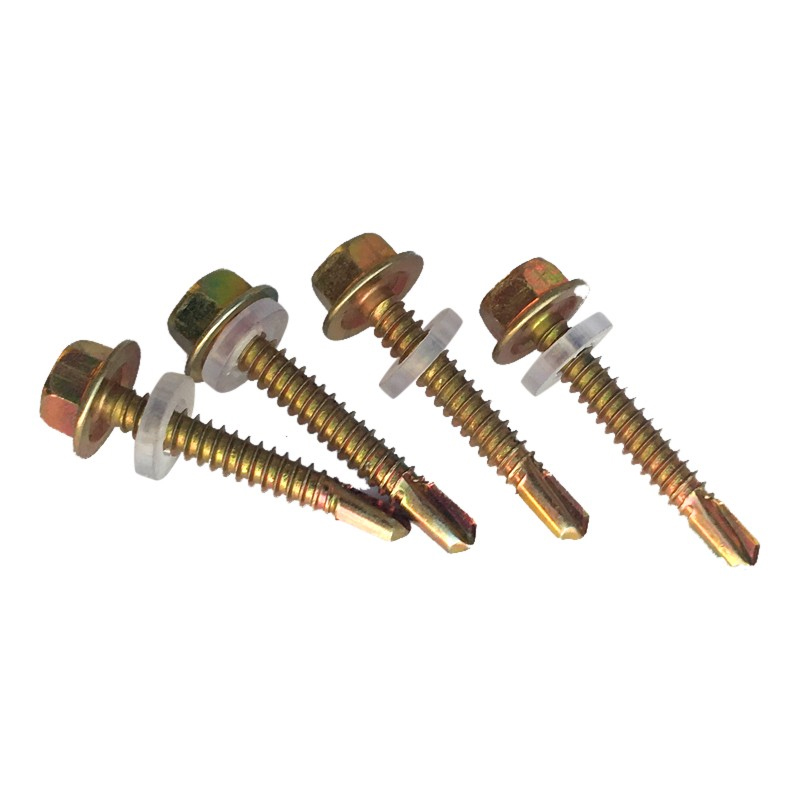
A high-quality drywall screw features a sharp, self-piercing point. For metal studs, this point is often augmented with a small notch or “cutting flute” that helps remove metal chips as the screw advances, reducing heat buildup and friction. For wood studs, a sharp gimlet point ensures easy penetration without splitting the wood.
The Material and Coating
The base material is typically carbon steel, chosen for its strength and cost-effectiveness. However, raw steel is prone to rust. Therefore, the coating is a critical component of the screw’s identity.
- Black Phosphate: The most common coating for interior drywall screws. It provides moderate corrosion resistance and, more importantly, offers a matte finish that accepts paint and joint compound well. It also reduces friction during driving.
- Zinc Plating: Used for exterior applications or high-humidity interiors. Zinc provides superior corrosion resistance but can be slippery, making it harder to control depth during installation. It may also react with certain joint compounds.
- Ceramic or Polymer Coatings: Premium options for extreme environments, offering enhanced corrosion resistance and color-matching capabilities.
Why 2-Inch Drywall Screws Are the Industry Standard
The 2-inch drywall screw is arguably the most ubiquitous fastener in the drywall industry. Its popularity stems from its ability to balance holding power with material compatibility across a wide range of standard construction scenarios.
Compatibility with Standard Stud Depths
In residential and light commercial construction, wall studs are typically 2×4 or 2×6 lumber, or their metal equivalents. A 2×4 stud actually measures 1.5 inches by 3.5 inches. When installing 1/2-inch drywall, a 2-inch screw penetrates 1.5 inches into the stud. This provides ample engagement depth for a secure hold without risking penetration through the other side of the stud.
For 5/8-inch drywall, which is often used for fire-rated assemblies or soundproofing, a 2-inch screw still penetrates 1.375 inches into the stud, which is generally considered sufficient for most non-load-bearing applications. However, for heavier loads or specific code requirements, longer screws (2-1/2 inches or 3 inches) might be recommended.
Versatility Across Substrates
The 2-inch length is versatile enough to be used with both wood and light-gauge metal studs. When paired with the appropriate thread type (coarse for wood, fine for metal), a 2-inch screw can handle the majority of interior wall and ceiling installations.
Ease of Handling and Installation
From a logistical standpoint, 2-inch screws are easy to handle. They are long enough to be gripped easily by magnetic bit holders on screwguns but short enough to minimize bending or breaking during high-torque installation. This balance contributes to faster installation times and reduced worker fatigue, which is a significant factor in large-scale commercial projects.
Selecting the Right 2 Drywall Screws for Wood Studs
Wood framing remains the dominant construction method in many regions, particularly in North America. When selecting 2 Drywall torlojuak for wood studs, several factors must be considered to ensure optimal performance.
Thread Type: Coarse is Key
For wood studs, always choose screws with coarse threads. The wide spacing of the threads allows the screw to displace wood fibers rather than cutting through them, creating a strong mechanical lock. Fine-thread screws in wood are prone to stripping out, especially in softer woods like pine or spruce, which are commonly used for framing.
Material Quality and Hardness
Wood studs can vary in density. Hardwoods require harder screws to prevent breakage, while softwoods require screws that are sharp enough to penetrate without splitting. High-quality drywall screws are heat-treated to achieve a balance of hardness and toughness. If a screw is too hard, it may snap under torque; if it is too soft, the head may strip or the threads may deform.
Handan Shengtong Fastener Manufacturing Co., Ltd. emphasizes rigorous quality control in heat treatment processes. Their drywall screws undergo precise tempering to ensure consistent tensile strength and torque performance. This consistency is vital for contractors who rely on speed and reliability, as a single broken screw can disrupt workflow and compromise the installation.
Preventing Wood Splitting
Splitting occurs when the screw displaces wood fibers faster than they can compress, causing the wood to crack along the grain. To mitigate this:
- Use Sharp Points: Ensure the screws have a sharp, self-piercing point.
- Avoid Edges: Keep screws at least 3/8 inch away from the edge of the stud.
- Correct Torque: Use a clutch-adjusted screwgun to avoid over-driving, which can increase internal pressure and cause splitting.
Selecting the Right 2 Drywall Screws for Metal Studs
Metal stud framing is increasingly popular in commercial construction and multi-family residential buildings due to its non-combustible nature, dimensional stability, and resistance to pests. However, metal studs present unique challenges for fastening.
Thread Type: Fine Thread Essential
For metal studs, fine-thread screws are mandatory. The thin gauge of metal studs (typically 25 to 18 gauge) cannot support the aggressive bite of coarse threads. Fine threads distribute the holding force over a larger area of the metal, reducing the risk of stripping. Additionally, fine-thread screws usually have a sharper point and a notched tip to facilitate penetration without pre-drilling.
Gauge Compatibility
Not all metal studs are created equal. Lighter gauge studs (higher gauge number, e.g., 25 gauge) require more delicate handling and finer threads. Heavier gauge studs (lower gauge number, e.g., 18 gauge) can accommodate slightly more aggressive threads but still require fine-thread screws for optimal performance. Using the wrong thread type can result in the screw spinning without advancing or stripping the hole entirely.
Corrosion Considerations
Metal studs are often galvanized, which provides some corrosion resistance. However, the interface between the screw and the stud can still be vulnerable to galvanic corrosion if incompatible materials are used. Black phosphate screws are generally compatible with galvanized steel, but in high-humidity environments, zinc-plated or ceramic-coated screws may be preferred to prevent rust staining on the drywall face.
Specialized Applications and Environmental Factors
While standard interior drywall installation is the most common use case, there are numerous specialized applications that require specific types of 2-inch drywall screws.
Moisture-Resistant and Exterior Applications
In bathrooms, kitchens, basements, or exterior soffits, moisture levels are higher. Standard black phosphate screws may rust over time, leading to unsightly stains on the drywall surface. For these areas, consider:
- Zinc-Plated Screws: Offer better corrosion resistance than phosphate. Look for screws with a thick zinc coating (e.g., yellow zinc or clear zinc).
- Stainless Steel Screws: The gold standard for corrosion resistance, particularly in coastal areas or high-humidity zones. While more expensive, they eliminate the risk of rust stains entirely.
- Polymer-Coated Screws: These screws feature a colored polymer coating that provides excellent corrosion resistance and can be matched to the drywall or paint color for aesthetic purposes.
Fire-Rated Assemblies
Fire-rated walls and ceilings require specific fastening patterns and screw types to maintain their rating. Typically, 5/8-inch Type X drywall is used, and screws must penetrate the studs sufficiently to hold the heavy boards in place during a fire event. While 2-inch screws are often acceptable for 1/2-inch drywall in fire-rated assemblies, 5/8-inch drywall may require 2-1/2-inch or 3-inch screws to achieve the necessary penetration depth. Always consult local building codes and the fire-rating specification for the specific assembly.
Soundproofing and Resilient Channels
In soundproofing applications, drywall is often mounted on resilient channels to decouple it from the studs. This requires screws that can penetrate the channel and the stud behind it. Since resilient channels add thickness, a 2-inch screw might not be long enough. In such cases, longer screws are necessary. However, if the channel is thin and the stud is standard, a 2-inch screw might suffice, provided it penetrates the stud by at least 1 inch. Careful calculation of total thickness is essential.
Quality Indicators: How to Identify Premium Drywall Screws
Not all drywall screws are created equal. In the B2B market, distinguishing between premium and economy screws is crucial for project success. Here are key indicators of quality:
Consistent Dimensions
Premium screws adhere strictly to international standards such as ANSI, DIN, and GB. This means consistent diameter, length, and thread pitch. Inconsistent dimensions can lead to jamming in automatic feeders, uneven driving depths, and variable holding power. Handan Shengtong Fastener Manufacturing Co., Ltd. utilizes advanced cold heading and thread rolling technologies to ensure dimensional accuracy across large batches, supporting seamless integration into automated construction workflows.
Surface Finish Integrity
The coating should be uniform and free of defects such as bubbles, peeling, or bare spots. A poor coating not only compromises corrosion resistance but can also increase friction during driving, leading to stripped heads or broken screws. Black phosphate coatings should be matte and even, while zinc platings should be smooth and bright.
Torque Performance
A high-quality screw should withstand high torque without stripping the head or breaking the shank. This is achieved through proper heat treatment and material selection. Manufacturers like Shengtong Fastener conduct systematic quality control tests, including torque performance and tensile strength assessments, to ensure their products meet the demands of high-speed professional installation.
Packaging and Presentation
While seemingly superficial, packaging reflects the manufacturer’s attention to detail. Premium screws are often packaged in sturdy boxes or collated strips that protect them from damage during shipping and handling. Collated screws are essential for use with auto-feed screwguns, which significantly increase installation speed on large projects.
Common Mistakes to Avoid When Choosing Drywall Screws
Even experienced professionals can make mistakes when selecting fasteners. Avoiding these common pitfalls can save time, money, and rework.
Using Wood Screws for Drywall
Standard wood screws have a smooth shank near the head and a different thread pattern. They do not pull the drywall tight against the stud and can cause the paper face to tear. Always use screws specifically designed for drywall.
Using the Wrong Length
Too short, and the screw won’t hold; too long, and it may penetrate plumbing or electrical wiring inside the wall. For standard 1/2-inch drywall on 2×4 studs, 1-1/4 inch to 1-5/8 inch screws are often sufficient, but 2-inch screws provide a safer margin of error and better holding power. For 5/8-inch drywall, 2-inch screws are ideal. Always calculate the total thickness of the materials being fastened.
Ignoring the Substrate
Using coarse-thread screws on metal studs is a recipe for disaster. They will strip the metal and fail to hold. Conversely, using fine-thread screws on wood studs may result in poor holding power and easy pull-out. Always match the thread type to the substrate.
Overlooking Corrosion Resistance
In humid environments, using standard black phosphate screws can lead to rust stains bleeding through the paint. This is a costly mistake to fix, as it often requires scraping, priming, and repainting the affected areas. Always assess the environmental conditions before selecting the coating.
Installation Best Practices for 2-Inch Drywall Screws
Choosing the right screw is only half the battle; proper installation is equally important. Here are best practices to ensure a professional finish.
Tool Selection
Use a dedicated drywall screwgun with a clutch adjustment. The clutch allows you to set the torque limit, ensuring the screw stops driving once the head is slightly below the surface of the drywall. This prevents over-driving, which can break the paper face and compromise the hold.
Screw Placement
Screws should be placed approximately 7 inches apart on walls and 12 inches apart on ceilings, though local codes may vary. Keep screws at least 3/8 inch from the edges of the drywall panels to prevent crumbling. On studs, space screws evenly to distribute the load.
Depth Control
The ideal depth for a drywall screw is slightly below the surface of the paper face, creating a small dimple. This dimple should be deep enough to accept joint compound but not so deep that it tears the paper. If the paper tears, the screw has lost its holding power and must be removed and replaced with a new screw placed nearby.
Angle of Entry
Drive screws perpendicular to the drywall surface. Angled driving can cause the screw to skim along the surface of the stud rather than penetrating it, resulting in a weak hold. It can also increase the risk of breaking the drywall paper.
The Role of Manufacturing Precision in Fastener Performance
The performance of a drywall screw is directly linked to the precision of its manufacturing. From raw material selection to final inspection, every step matters.
Raw Material Quality
High-quality carbon steel wire is the foundation of a durable screw. Impurities in the steel can lead to weak points that cause breakage during installation. Reputable manufacturers source raw materials from certified suppliers and conduct rigorous testing to ensure chemical composition and mechanical properties meet specifications.
Cold Heading and Thread Rolling
Cold heading forms the head of the screw, while thread rolling creates the threads. These processes must be precise to ensure consistent geometry. Advanced machinery, such as that used by Handan Shengtong Fastener, allows for high-speed production with tight tolerances. This precision ensures that each screw performs predictably, reducing waste and improving installation efficiency.
Heat Treatment and Surface Finishing
Heat treatment enhances the strength and toughness of the screw. Proper tempering prevents brittleness while maintaining hardness. Surface finishing, such as phosphating or zinc plating, not only protects against corrosion but also improves drivability. A uniform coating reduces friction, allowing the screw to drive smoothly and consistently.
Kalitatea ziurtatzea
Comprehensive quality assurance protocols are essential. This includes dimensional checks, torque testing, and corrosion resistance testing. Manufacturers aligned with ISO-influenced best practices, like Shengtong Fastener, implement systematic quality control at every stage, from blank forming to final inspection. This disciplined approach ensures stable batch-to-batch performance, which is critical for large-scale construction projects where consistency is paramount.
Procurement Guide: Evaluating Suppliers for Drywall Screws
For B2B buyers, selecting the right supplier is as important as selecting the right product. Here are key factors to consider when evaluating drywall screw manufacturers.
Production Capacity and Lead Times
Ensure the supplier has the capacity to meet your volume requirements within your timeline. Vertically integrated manufacturers, such as Handan Shengtong Fastener, often have better control over lead times because they manage the entire production process in-house. This reduces dependency on external suppliers and minimizes delays.
Customization Capabilities
Different projects may require specific screw lengths, head types, or coatings. A flexible supplier should offer customization options to meet these needs. Shengtong Fastener, for example, supports comprehensive customization across dimensions, mechanical properties, and surface treatments, allowing clients to tailor products to their specific application requirements.
Compliance with Standards
Verify that the supplier’s products comply with relevant international standards, such as ANSI, DIN, and GB. Compliance ensures that the screws meet minimum performance criteria for strength, durability, and safety. Request certification documents or test reports to confirm compliance.
Technical Support and Service
A good supplier provides more than just products; they offer technical support and service. This includes assistance with product selection, troubleshooting installation issues, and optimizing logistics. Responsive end-to-end service delivery, encompassing technical consultation and coordinated logistics, adds significant value to the procurement process.
FAQ: Common Questions About 2 Drywall Screws
Q: Can I use 2-inch drywall screws for ceiling installations?
A: Yes, 2-inch screws are suitable for ceilings, especially when using 1/2-inch or 5/8-inch drywall. However, ensure that the screws penetrate the joists or studs by at least 1 inch. For heavier 5/8-inch drywall or wider joist spacing, consider using 2-1/2-inch screws for added security.
Q: What is the difference between black phosphate and zinc-plated drywall screws?
A: Black phosphate screws are designed for interior use and provide a good surface for painting. They offer moderate corrosion resistance. Zinc-plated screws offer superior corrosion resistance and are suitable for exterior or high-humidity interior applications. However, zinc plating can be slippery, making depth control more challenging during installation.
Q: How many 2-inch drywall screws do I need for a standard 4×8 sheet of drywall?
A: For walls, a general rule of thumb is approximately 32-40 screws per 4×8 sheet, depending on stud spacing (16 inches or 24 inches on center). For ceilings, you may need more screws due to gravity and the need for tighter spacing. Always consult local building codes for specific requirements.
Q: Can I reuse drywall screws?
A: No, drywall screws are not designed to be reused. Once removed, the threads are often damaged, and the holding power is compromised. Additionally, removing a screw can damage the drywall paper, making it difficult to achieve a smooth finish. Always use new screws for reinstallation.
Q: Why do my drywall screws keep stripping?
A: Stripping can be caused by several factors: using the wrong driver bit (e.g., a worn-out Phillips bit), applying too much torque, or using low-quality screws with soft heads. Ensure you are using a high-quality driver bit that fits snugly, adjust your screwgun clutch to the correct setting, and choose screws from a reputable manufacturer.
Bukaera
Eskubidea aukeratzea 2 Drywall torlojuak is a fundamental decision that impacts the quality, durability, and aesthetics of any drywall installation. By understanding the nuances of thread design, material composition, coating options, and application-specific requirements, professionals can make informed decisions that enhance project outcomes. Whether working with wood or metal studs, in dry or humid environments, the principles outlined in this guide provide a roadmap for selecting the optimal fastener.
Quality matters. Investing in high-performance screws from reputable manufacturers like Handan Shengtong Fastener Manufacturing Co., Ltd. ensures consistency, reliability, and peace of mind. With their vertically integrated production capabilities, strict quality control, and commitment to customer satisfaction, Shengtong Fastener stands as a reliable partner for industries demanding high-strength, high-precision fastening solutions.
As construction techniques continue to advance, the importance of precise fastening will only grow. By staying informed and prioritizing quality, builders and contractors can deliver superior results that stand the test of time. Remember, the right screw is not just a fastener; it is the foundation of a lasting structure.